
A Prayer Based on 1 John: Love One Another
A prayer based on 1 John’s words on love starts from 1 John 4:7–12, six verses that say “love is of God,” “God is love” and “if we love one another, God remains in us.” Below is that prayer, about one minute long, and the story of the aged John at Ephesus who kept repeating five words: “Little children, love one another.”
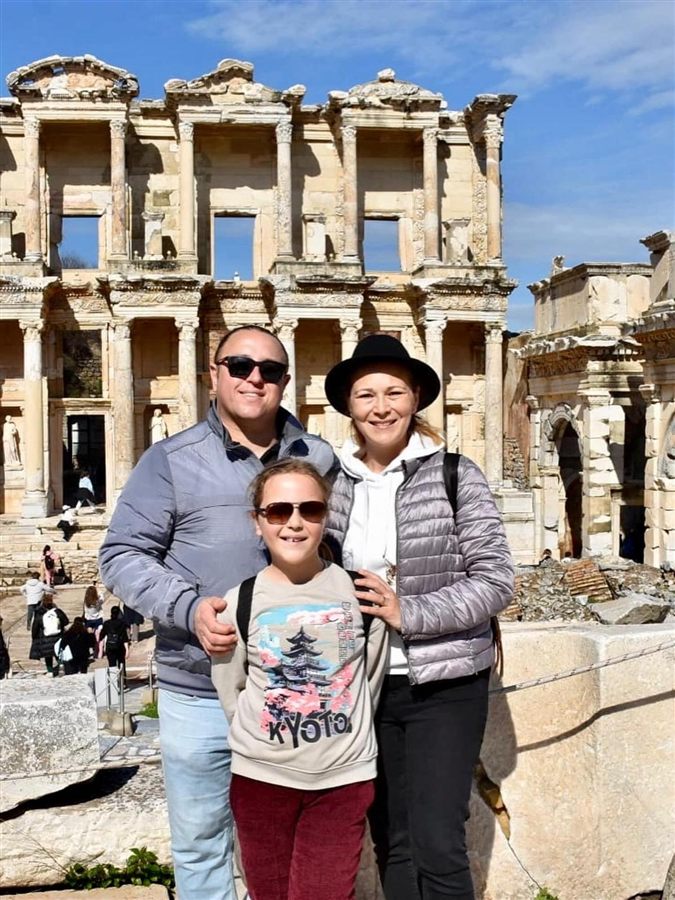
Written by Hasan Gülday · the Gülday family, Ephesus
On this page: What 1 John says · John’s last words in Ephesus · 1 John 4:7–12 · The prayer · For someone hard to love · John’s tomb · Send it to Ephesus
What does 1 John say about love?
1 John says love comes from God and that “God is love” (4:8, 4:16). God showed it first by sending his Son, so we love because he loved us. Real love is practical, “in deed and truth” (3:18), and nobody can love God while hating a brother or sister (4:20).
That is the whole letter in a few lines, and John says it again and again. The exact words “love one another” come five times in this short letter (3:11, 3:23, 4:7, 4:11 and 4:12). He calls his readers “little children” and “beloved,” the way an old man speaks to people he has known for a long time.
My family and I carry prayers up the mountain to the House of Virgin Mary, near Ephesus, and place them on the wishing wall. Ephesus is where the Church remembers John growing old, so this letter feels close to home for us. This page tells the story people in Ephesus have repeated about him for sixteen centuries, then turns 1 John 4:7–12 into one short prayer you can say today, for yourself or for someone you find hard to love.
“Little children, love one another”: John’s last words in Ephesus
The story comes from St Jerome, who wrote it down in the 380s in his commentary on Paul’s letter to the Galatians, at Galatians 6:10. According to Jerome, John lived on at Ephesus into extreme old age. He could no longer walk, so his disciples carried him into the gathering of the church. He was too weak to preach, and at each meeting he said only one thing: “Little children, love one another.”
After a while the people grew tired of hearing the same sentence, and they asked him why he always said it. Jerome gives his answer, which in a plain English rendering reads: “Because it is the Lord’s command, and if this alone is done, it is enough.”
It is a tradition, not Scripture, and Jerome wrote about three hundred years after John died. But it fits the letter so well that it has been told ever since. The Catholic Encyclopedia lists it among the “beautiful traits” remembered from John’s last years, citing Jerome on Galatians 6:10 (Catholic Encyclopedia, St John the Evangelist). The same article says John returned to Ephesus and died there at a great age, about AD 100.
John was not making the command up. He had heard it himself at the Last Supper: “A new commandment I give to you, that you love one another” (John 13:34). In his letter he calls it the message “which you heard from the beginning” (1 John 3:11). At the end of a long life, it was the one sentence he wanted to leave behind.

1 John 4:7–12, the love passage
Beloved, let’s love one another, for love is of God; and everyone who loves has been born of God and knows God. He who doesn’t love doesn’t know God, for God is love. By this God’s love was revealed in us, that God has sent his only born Son into the world that we might live through him. In this is love, not that we loved God, but that he loved us, and sent his Son as the atoning sacrifice for our sins. Beloved, if God loved us in this way, we also ought to love one another. No one has seen God at any time. If we love one another, God remains in us, and his love has been perfected in us.
1 John 4:7–12 · World English BibleRead slowly, these six verses move in a clear order, and the prayer below follows it.
- Where love comes from (4:7–8). Love is “of God.” When we love, we are showing something that started with him, not something we produced.
- How we know (4:9–10). John does not point to a feeling. He points to an event: God sent his Son. “Not that we loved God, but that he loved us.” God moved first.
- What follows (4:11). “If God loved us in this way, we also ought to love one another.” Being loved first is the reason to love next.
- What it does (4:12). Nobody has seen God, John says, but when we love one another, God “remains in us.” Other people meet God’s love through ours.
A few verses later John says it a second time, “God is love, and he who remains in love remains in God” (4:16), and adds the line many people know by heart: “perfect love casts out fear” (1 John 4:18).
A prayer based on 1 John on love, to say in one minute
Here is 1 John 4:7–12 turned into a prayer. It takes about a minute. Say it in the morning, or before you meet someone you are finding difficult.
Father, you are love, and every true love I have ever known began with you. You loved me first, before I loved you, before I even knew you, and you showed it by sending your Son. Since you have loved me like this, teach me to love the people you have put beside me: ______. Let my love be more than words, something I do, in deed and in truth. No one has seen you, so let them see a little of you in the way I treat them. Remain in me, and let your love grow complete in me. Little children, love one another. Lord, it is enough. Amen.
A prayer based on 1 John 3:18 and 4:7–12At the blank, say names. Start with the easy ones, the people you already love. Then add one name that is harder to say.
The last line is John’s own sentence, the one Jerome remembered. If you only have ten seconds, it works on its own:
Father, you loved me first. Help me love ______ today, in deed and in truth. Amen.
A short prayer · after 1 John 3:18 and 4:19
Praying 1 John for someone who is hard to love
1 John is not a soft letter. “If a man says, ‘I love God,’ and hates his brother, he is a liar; for he who doesn’t love his brother whom he has seen, how can he love God whom he has not seen?” (4:20). John does not ask us to feel warmly about everyone. He asks us not to shut our hearts (3:17), and to love “not in word only” but “in deed and truth” (3:18).
For the person you are struggling with, praying for them is often the first deed. It does not mean pretending nothing happened, and it does not mean staying where you are being harmed. It means asking God for their good, by name, before you ask him to fix the problem between you. Our page on how to pray for someone has more words for praying for someone who hurt you.
Lord, you know how hard it is for me to love ______. I will not pretend. I am hurt, or tired, or angry. But you loved me first, when I was not easy to love. Bless ______ today with something good. Keep me from closing my heart. Show me one thing I can do, in deed and in truth, and give me the patience to do it. Amen.
For someone hard to love · after 1 John 3:17–18 and 4:19–20And for someone who is easy to love but far away, a child abroad or a friend you have lost touch with, John’s line about God “remaining” in us is a comfort. Love does not stop at a border. Paul, who also wrote to Ephesus, prayed for that church from far away; our page on Paul’s prayers in Ephesians turns his prayers into words you can use for people far from you.
Where John is remembered in Ephesus today
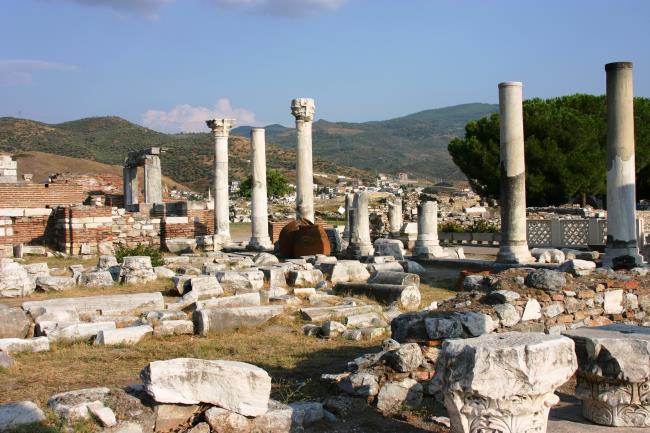
Christians have honored John’s grave at Ephesus since very early times. Around AD 190, Polycrates, the bishop of Ephesus, wrote that John “fell asleep at Ephesus” (Eusebius, Church History 5.24). On Ayasuluk Hill, in today’s Selçuk, a church grew over the place. In the mid-sixth century Emperor Justinian rebuilt it as a great cross-shaped basilica with domes. UNESCO lists the remains of the Basilica of St John among the testaments to the city’s importance to Christianity (UNESCO, Ephesus).
The roofs and domes have long gone. What you see now is brick walls, marble columns, and in the middle of the nave a small marble platform with four columns at its corners. A plain marble slab on it reads, in Turkish and English, “The Tomb of St. John.” It is a quiet spot, and it is not hard to imagine an old man being carried in and saying his one sentence.

Ephesus also remembers John as the disciple who took Mary into his home. From the cross Jesus told him, “Behold, your mother,” and “from that hour, the disciple took her to his own home” (John 19:27). An old tradition, which the Gospels themselves do not record, holds that John brought her to Ephesus, and the House of Virgin Mary on the mountain above the ancient city is honored as her last home. That is where your prayer goes.
John’s feast day is December 27. In 2026 that date falls on a Sunday, when Catholic parishes keep the feast of the Holy Family instead, but the Christmas season is still a good time to pray his words. If your family will be together at Christmas, our prayer for your family from Ephesians fits the table.
Last reviewed November 2026. Bible text from the World English Bible (public domain); sources linked below.
Send a “love one another” prayer to Ephesus
John’s sentence is short enough to fit on a note. If there is someone you find hard to love, or someone you love who is far away, send us one prayer for them. Write their first name and one hope for them, and put your own name in the name field. Up to 300 characters fit, in any language. My family and I place it on the wishing wall at the House of Virgin Mary on our regular visits, free of charge. We do not promise a date, only that it is placed with care.
For my brother Daniel. We have not spoken in two years. Lord, bless him today, soften both our hearts, and help me love him in deed and in truth. Little children, love one another.
A “love one another” note · 178 charactersUse a first name only, and write a hope, not a complaint. Our page on sending a prayer for someone else explains what to write and what to leave out, and how to send a prayer request walks through each step.
Sources & further reading
- 1 John 4:7–21: “God is love” and “perfect love casts out fear” — Bible Gateway, World English Bible
- 1 John 3:11–23: “love one another” and “in deed and truth” — Bible Gateway, World English Bible
- John 13:34–35: “A new commandment I give to you” — Bible Gateway, World English Bible
- John 19:26–27: “the disciple took her to his own home” — Bible Gateway, World English Bible
- St John the Evangelist: his last years at Ephesus and Jerome’s “Little children, love one another” — Catholic Encyclopedia (New Advent)
- Letters of John: date and authorship — Encyclopaedia Britannica
- Saint John the Apostle: Ephesus and his feast day — Encyclopaedia Britannica
- Ephesus: the Basilica of St John on Ayasuluk Hill — UNESCO World Heritage Centre
The capitals of the columns in the Basilica of St John on Ayasuluk Hill still carry the carved monograms of Emperor Justinian and Empress Theodora, who rebuilt John’s church in the sixth century.
“Beloved, let’s love one another, for love is of God; and everyone who loves has been born of God and knows God”
1 John 4:7
People often ask
Was the book of 1 John written after Patmos? ▾
Probably, but nobody knows for sure. The letter names no date or place. Britannica says the three letters of John were written around AD 100, and tradition places their writing at Ephesus. The Catholic Encyclopedia says John returned to Ephesus after Domitian’s death and died there about AD 100.
How many times does 1 John say “love one another”? ▾
Five times: 1 John 3:11, 3:23, 4:7, 4:11 and 4:12. The words “love” and “loves” come many more times than that, which is why 1 John is often called the letter of love. 2 John 5 repeats the same command once more.
Where does 1 John say God is love? ▾
In 1 John 4:8 and again in 4:16. Verse 8 says, “He who doesn’t love doesn’t know God, for God is love.” Verse 16 adds, “God is love, and he who remains in love remains in God, and God remains in him.”
What does “perfect love casts out fear” mean? ▾
It means that the more fully you trust God’s love, the less you fear his judgment. John wrote it in 1 John 4:17–18: love made complete gives “boldness in the day of judgment,” because fear is about punishment. It is not a promise that you will never feel afraid.
Who said “Little children, love one another”? ▾
St John the Apostle, according to St Jerome. In his commentary on Galatians 6:10, Jerome writes that the very old John at Ephesus was carried into church and said only this. Asked why, he answered that it is the Lord’s command, and if this alone is done, it is enough.
When is the feast of St John the Apostle? ▾
December 27 in the Western churches. In 2026 it falls on a Sunday, so Catholic parishes celebrate the Holy Family that day instead. Many Orthodox churches remember John’s repose on September 26 and keep a second feast on May 8.
Can I send a prayer for someone I am not speaking to? ▾
Yes. Use their first name only and write a hope for them, not a complaint about them, for example: “Bless Daniel, and soften both our hearts.” We place every prayer on the wishing wall free of charge. Our guide to praying for someone else has more.
Continue the story
Paul’s Prayers in Ephesians
Two prayers from Ephesians 1 and 3, turned into a one-minute daily prayer for yourself or someone you love.
Keep reading →
A Prayer for Someone Else
How to send a prayer for a friend, a parent or a child, what to write, and why to ask before naming them.
Pray for them →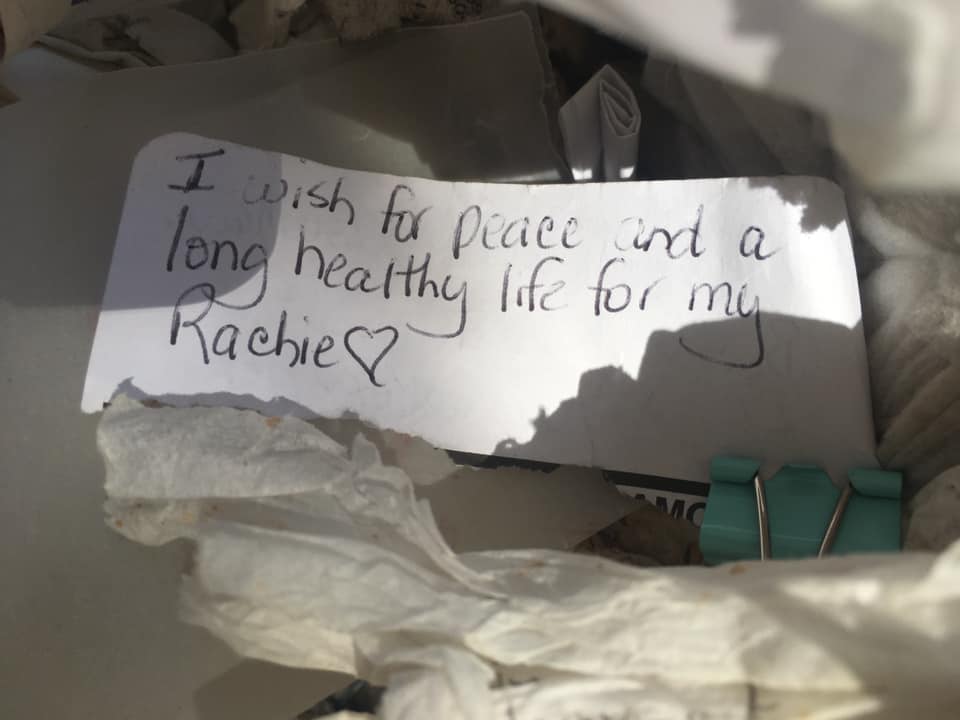
How to send a prayer request
What to write, how to send it, and exactly what happens after you press send.
Step by step →Love one another. It is enough.
Write one first name and one hope for someone hard to love, or far away. We will place your prayer on the wishing wall at the House of Virgin Mary near Ephesus, free of charge, in any language.
Send my prayer nowFree · No donations asked · Any language · Placed by our family in person