
Where Did the Virgin Mary Die? Ephesus and Jerusalem
Where did the Virgin Mary die? No one knows for certain: the Bible last mentions her in Acts 1:14 and never records her death or burial. Two old traditions answer the question. One places her death in Jerusalem, with her tomb near Gethsemane; the other places it near Ephesus, where John is said to have brought her. The 1950 dogma of the Assumption names neither place.
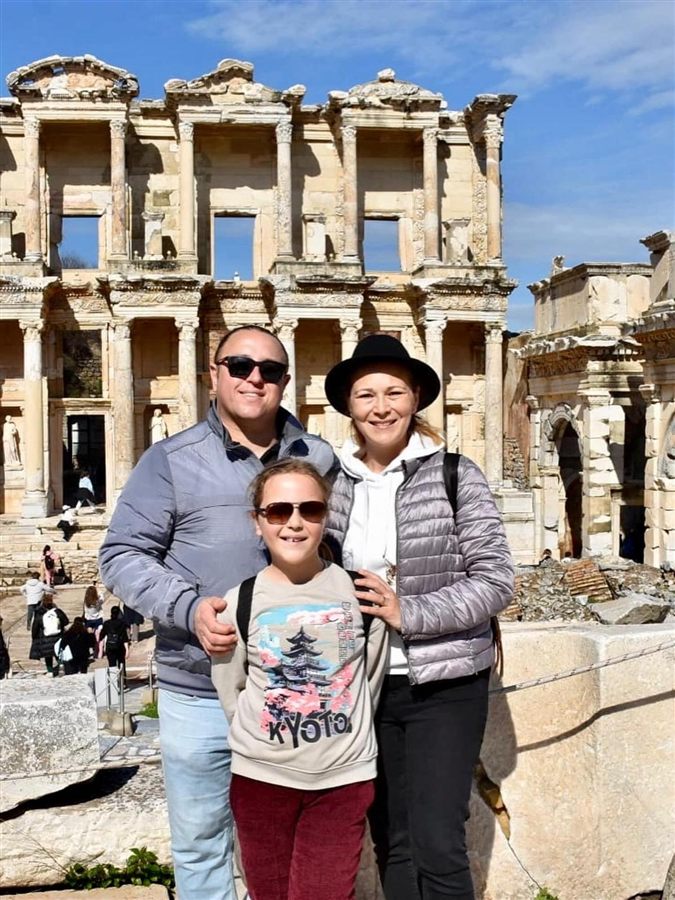
Written by Hasan Gülday · the Gülday family, Ephesus
On this page: What the Bible says · Did Mary die? · Jerusalem · Ephesus · Dormition and Assumption · 15 August · A prayer
Where did the Virgin Mary die? What the Bible says
The Bible does not say where the Virgin Mary died, or when, or how. The last scene in the Gospels that places her somewhere is the cross. Jesus, seeing his mother and “the disciple whom he loved” standing together, gave them to each other, telling her to see her son in the disciple, and telling him to see his mother in her. John’s Gospel adds one line that matters for everything below: “From that hour, the disciple took her to his own home” (John 19:26–27).
After the Ascension, Mary appears once more. In the upper room in Jerusalem, the apostles “continued steadfastly in prayer… along with the women, and Mary the mother of Jesus” (Acts 1:14). Then Scripture falls silent about her. Did John bury Mary in the Bible? No: no book of the Bible describes her death, her funeral or her grave. Every answer to the question “where did she die?” comes from tradition, not from Scripture.
That silence was noticed early. Around AD 377, Bishop Epiphanius of Salamis told his readers to search the Scriptures: they would not find whether Mary died or not, or whether she was buried. A little later in the same work he concluded that no one knows her end. The 1907 Catholic Encyclopedia says the same thing plainly: about the day, the year and the manner of her death, “nothing certain is known.”
Did the Virgin Mary die before the Assumption?
Most Christians who have thought about it say yes. The Orthodox and Eastern churches call the event the Dormition, the “falling asleep” of the Mother of God: she died a natural death, Christ received her soul, and her body was raised and taken into heaven, leaving the tomb empty. When people search for “the resurrection of the Virgin,” this is usually what they are reaching for. The word the churches use is not resurrection but Dormition in the East and Assumption in the West.
The Catholic Church defined the Assumption on 1 November 1950. In Munificentissimus Deus, Pope Pius XII declared that Mary, “having completed the course of her earthly life, was assumed body and soul into heavenly glory.” The wording was chosen with care. It does not say that she died, and it does not say where. It names no city at all.
That left room for a small minority who think Mary was taken up without dying. Pope John Paul II addressed it in a general audience on 25 June 1997, “Mary and the human drama of death”. Pius XII, he said, “did not intend to deny the fact of her death”; since Christ died, it would be hard to hold the contrary for his Mother. So the common teaching is clear on whether she died. On where, the Church has never ruled.
The Jerusalem tradition: Mount Zion and the Tomb of Mary
The oldest stories of Mary’s last days, the Dormition narratives, began to circulate in the early centuries of the church, in Syriac, Greek, Coptic and later Latin. They do not agree on every detail, but they place the scene in Jerusalem. In the version most people know, the apostles are gathered from the ends of the earth to her bedside, she dies peacefully, and they carry her body to a tomb at Gethsemane, which is later found empty.
Two places in Jerusalem keep that tradition today:
- The Tomb of Mary, in the Kidron Valley at the foot of the Mount of Olives, close to Gethsemane. Pilgrims go down a wide stairway of 47 steps, its upper part from the 12th century, to a rock-cut tomb in the crypt. A church stood here by the 5th or 6th century. It is held today by Eastern churches, and Muslims honor it too as the grave of the mother of Jesus (background).
- The Dormition Abbey on Mount Zion, near the traditional upper room, marks the place where she is said to have fallen asleep. The present church was dedicated in 1910 and is kept by Benedictine monks (background).
A later Greek account adds a story from the time of the Council of Chalcedon in 451: the Emperor Marcian and the Empress Pulcheria asked the bishop of Jerusalem for Mary’s body, and were told that her tomb had been found empty. Only her burial garments, the story says, were sent to Constantinople. Historians treat the story with caution, but it shows how firmly the tomb near Gethsemane was tied to her by then.
Because these traditions are older and more widely shared, most scholars and most churches lean toward Jerusalem. The 1907 Catholic Encyclopedia summed it up the same way: two cities claim her departure, common opinion favors Jerusalem, where her tomb is shown, and a minority argues for Ephesus.
The Ephesus tradition: John’s home and the house on the mountain
The case for Ephesus begins with the same verse in John’s Gospel. If “the disciple took her to his own home,” then Mary lived where John lived, and early Christian writers place John’s later life in Ephesus. Around AD 180 Irenaeus wrote that John published his Gospel “during his residence at Ephesus in Asia” (Against Heresies 3.1.1), and the Basilica of Saint John at Selçuk was built over his traditional tomb. The Council of Ephesus met in 431 in a great church of the city dedicated to Mary, the church where she was proclaimed Theotokos, the God-bearer.
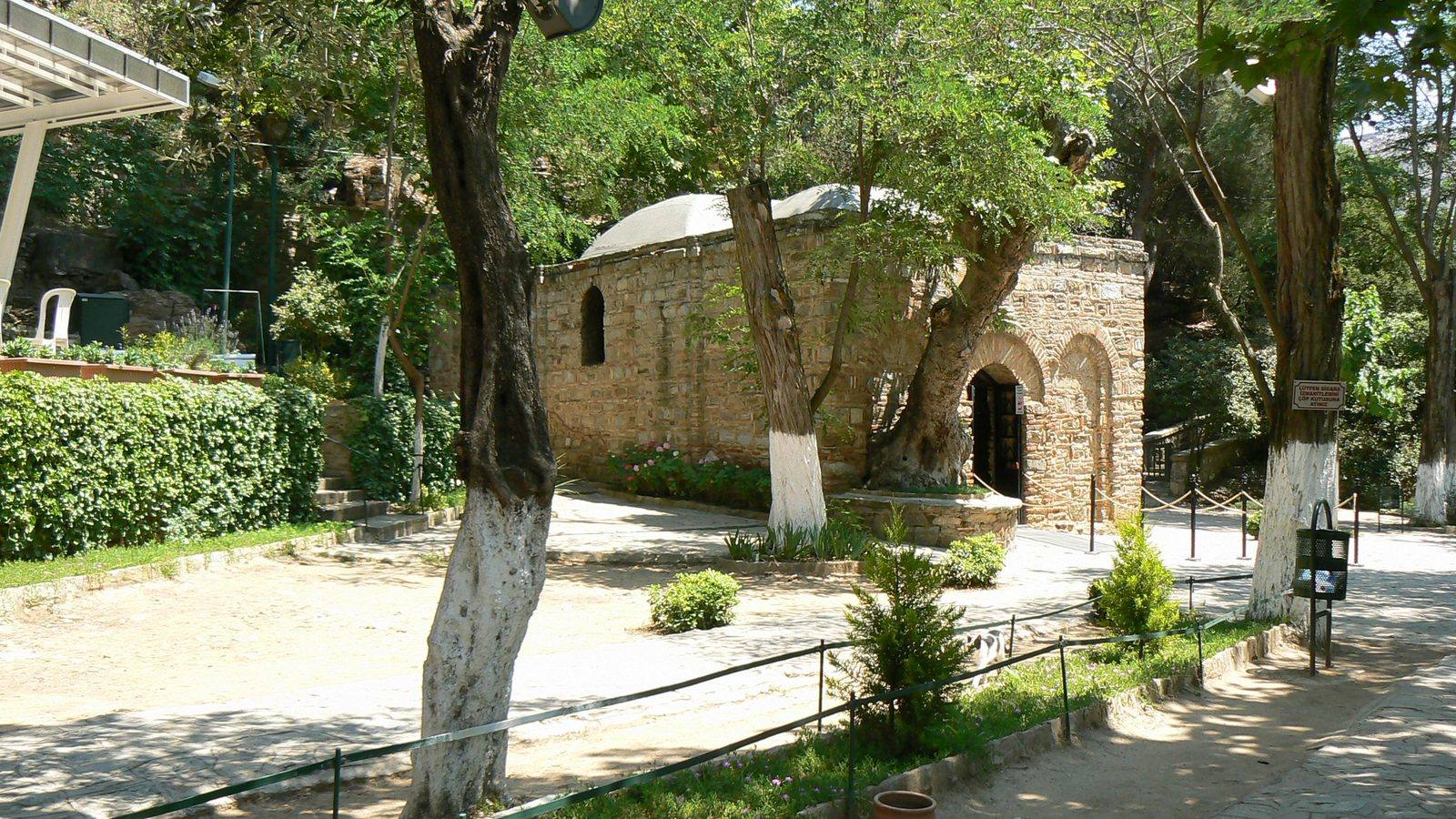
None of that proves Mary died at Ephesus. No ancient writer says so outright, and critics point out that the Ephesus tradition is much younger than the Jerusalem one. It was the visions of the German nun Anne Catherine Emmerich (1774–1824) that gave it a place on the map. In The Life of the Blessed Virgin Mary, the book made from those visions, Mary lives her last years in a stone house John built on a hill near Ephesus, dies there, and is laid in a rock tomb nearby before her Assumption. In 1891 two priests followed the book up Bülbül Mountain and found a ruined house where it said the house would be. The Orthodox villagers of Şirince already knew the place as Panaya Kapulu and climbed to it every 15 August, the feast of the Dormition.
Since then, the Ephesus tradition has had real support from Rome without a ruling. Pius XII named the house a Holy Place in 1951, the year after he defined the Assumption, and three popes have prayed there: Paul VI in 1967, John Paul II in 1979 and Benedict XVI in 2006 (the papal visits). The Church has never declared that Mary lived or died in the house. Our page Did the Virgin Mary live in Ephesus? weighs the case for her life there; this page is about the end of it.
Did the Virgin Mary die in Ephesus?
Possibly, but no one can prove it. The Bible gives no place. A tradition of the Middle Ages, revived by Emmerich’s visions and the 1891 discovery, holds that Mary ended her earthly life near Ephesus with John. The older Jerusalem tradition places her death on Mount Zion and her tomb near Gethsemane.
Is the Virgin Mary buried in Ephesus, then? No grave of Mary is shown or venerated near the house today, and none has been identified in Turkey. Both traditions, in the end, agree on the part that matters most to believers: whatever tomb received her body did not keep it.
Dormition and Assumption: one feast, two names
East and West keep the same day, 15 August. A later Byzantine historian credits the Emperor Maurice (582–602) with fixing the feast on that date across the empire. The Orthodox call it the Dormition of the Theotokos; Catholics call it the Assumption of the Blessed Virgin Mary. The difference is mainly of emphasis. The Dormition looks at her death and the empty tomb; the Assumption looks at where she went.
The date is not a record of the day she died. The Catholic Encyclopedia suggests it is more likely the anniversary of a church’s dedication, and early writers placed her death anywhere from three to fifteen years after the Ascension. What the feast keeps is a hope, not a timetable: that the body which carried Christ was not left to decay, and that ours will not be either.
- Dormition (East): Mary truly died, and was raised and taken up. Many Orthodox fast in the first two weeks of August to prepare for the feast.
- Assumption (Catholic): defined on 1 November 1950. It teaches that she was taken up body and soul “having completed the course of her earthly life,” and leaves the manner and the place open.
- Anglican and Lutheran churches often keep 15 August as a feast of Saint Mary without teaching the Assumption as doctrine, and draw no conclusion about where she died.
Why 15 August is kept at the house above Ephesus
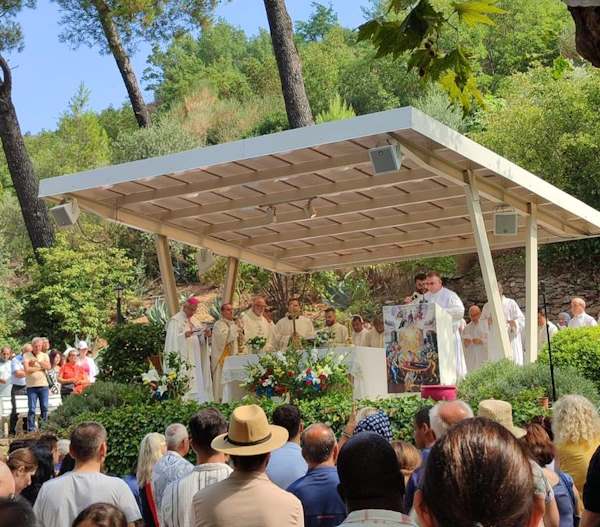
Whatever one thinks of the house, 15 August is its great day. Priests celebrate the Assumption at the open-air altar in the garden, and Christians and Muslims stand side by side under the trees. Our photo page shows the Assumption feast on the mountain. The custom is older than the discovery: long before 1891, the villagers of Şirince kept the Dormition at the ruin they called Panaya Kapulu.
Pilgrims who favor the Jerusalem tradition still come. They are not claiming the house as her deathbed. They come because Mary was entrusted to John, and John to her, and because this is a place where people have prayed to her for a very long time.
A prayer for the hour of our death
Every Hail Mary ends with a request about death, asking her to pray for us “now and at the hour of our death.” Whatever city saw her last day, she knows the road. This short prayer can be said on 15 August, on 1 November or at any bedside:
Holy Mary, Mother of God, you completed the course of your earthly life and were taken into the glory of your Son. Be near to all who are dying tonight, in hospitals, in homes and alone. Be near to me at the hour of my death, and bring me safely to Jesus. Amen.
A prayer for the hour of death · based on the Hail MaryFind the Hail Mary, the Memorare and the Sub Tuum Praesidium in full on our page of prayers to the Virgin Mary. If you are praying for someone who has already died, our prayer for a loved one who passed away has the Eternal Rest and a personal prayer.
Last reviewed October 2026. Sources: Munificentissimus Deus (1950), John Paul II’s audience of 25 June 1997 and the Catholic Encyclopedia (1907), all linked below.
Leave a prayer at Mary’s house
Whichever tradition you favor, the house above Ephesus is where prayers to Mary are left today. Below the chapel, thousands of folded notes hang on the wishing wall, from people of every faith who came, or who sent their words with someone who did. Our family places the prayers people send us on that wall on our regular visits to the house.
Sources & further reading
- John 19:25–27: “the disciple took her to his own home” — Bible Gateway, World English Bible
- Acts 1:14: the last mention of Mary in the Bible — Bible Gateway, World English Bible
- Munificentissimus Deus (1 November 1950): the definition of the Assumption — Vatican.va
- John Paul II, “Mary and the human drama of death” (25 June 1997) — Vatican.va
- The Assumption of the Blessed Virgin Mary: Jerusalem and Ephesus — Catholic Encyclopedia (1907), New Advent
- Irenaeus, Against Heresies 3.1.1: John at Ephesus — New Advent, Ante-Nicene Fathers translation
- Tomb of the Virgin Mary, Jerusalem — Wikipedia
When Pius XII defined the Assumption on 1 November 1950, he chose the words “having completed the course of her earthly life”, so the dogma neither says that Mary died nor names the city where her life ended.
“All these with one accord continued steadfastly in prayer and supplication, along with the women, and Mary the mother of Jesus.”
Acts 1:14
People often ask
Where is the Virgin Mary buried? ▾
No one knows for certain, because the Bible does not record her burial. The oldest tradition points to the Tomb of Mary in the Kidron Valley in Jerusalem, near Gethsemane, which Christians and Muslims both honor. Both the Jerusalem and the Ephesus traditions hold that her tomb did not keep her body.
Did the Virgin Mary die before the Assumption? ▾
Most Christians say yes. The Orthodox Dormition teaches that she died and was then raised and taken up. The Catholic dogma of 1950 says only that she was assumed “having completed the course of her earthly life,” and in 1997 John Paul II said Pius XII “did not intend to deny the fact of her death.”
Did John bury Mary in the Bible? ▾
No. The Bible never describes Mary’s death or burial. John 19:27 says only that from the hour of the crucifixion “the disciple took her to his own home,” and her last appearance is in prayer with the apostles in Acts 1:14. The stories of her burial come from later tradition.
Is the Virgin Mary buried in Ephesus or anywhere in Turkey? ▾
No grave of Mary is shown or venerated in Turkey. The tradition linked to Ephesus is that she spent her last years in the house on Bülbül Mountain near the city and was taken up from there. Emmerich’s visions describe a rock tomb nearby, but no such tomb has been identified.
When did the Virgin Mary die, and how old was she? ▾
Nobody knows. Early writers placed her death between three and fifteen years after the Ascension, and Scripture gives no age. Emmerich’s visions put it shortly before her 64th birthday, but that is a private revelation, not history. The feast on 15 August marks the event, not a known date.
What is the “resurrection of the Virgin”? ▾
It usually means the Orthodox belief that Mary died, was buried and was raised by Christ before being taken into heaven, so that her tomb was found empty. Churches do not call it a resurrection: the East calls it the Dormition and the West the Assumption, both kept on 15 August.
Can I send a prayer to the House of Virgin Mary for someone who is dying? ▾
Yes, free of charge. Write their first name and one line, for example “Mary, stay with my grandmother Rosa in her last days,” in the form on our home page. We place it on the wishing wall at the house on our next regular visit; we do not promise a date.
Continue the story
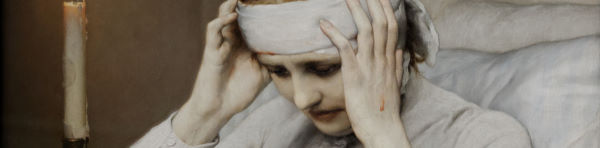
Anne Catherine Emmerich
The bedridden nun whose visions found Mary’s house — without her ever leaving Germany.
Keep reading →
Popes at Mary’s House
Paul VI, John Paul II, Benedict XVI — a century of papal devotion to the little stone house.
Keep reading →
The Wishing Wall
Thousands of folded prayers on one wall — the tradition your prayer becomes part of.
Discover the tradition →Leave a prayer at her house.
Whichever tradition you favor, the house above Ephesus is where prayers to Mary are left today. Send yours, and we will place it on the wishing wall, free of charge, in any language.
Send my prayer nowFree · No donations asked · Any language · Placed by our family in person