
A Prayer for Persecuted Christians, From Paul in Chains
A prayer for persecuted Christians can start with the request Paul made from his own chains. Calling himself “an ambassador in chains” (Ephesians 6:20), he did not ask the church to pray for his release, only that he would speak boldly. Open Doors counts 388 million Christians facing high levels of persecution in 2026. This page turns Paul’s request into a prayer for them.
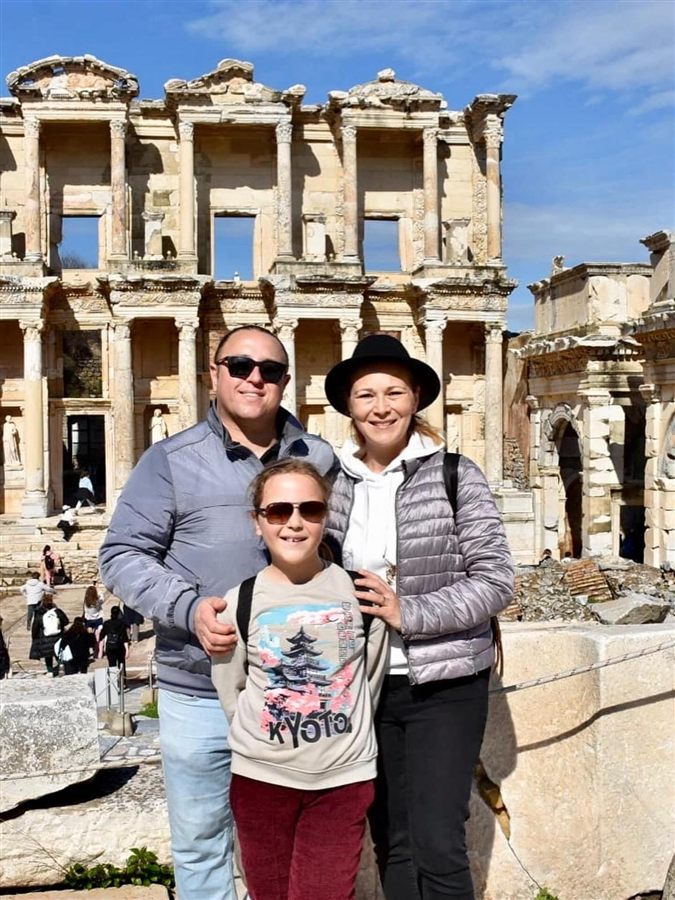
Written by Hasan Gülday · the Gülday family, Ephesus
How can I pray for persecuted Christians?
Pray the way Paul asked to be prayed for. Ask for courage to speak (Ephesians 6:19–20), rescue from danger (2 Corinthians 1:10–11) and strength to endure. Ask that they are not forgotten (Hebrews 13:3). Pray for their families, and for the people who persecute them (Matthew 5:44). Then give thanks for every answer.
Every one of those requests comes from the New Testament, and most of them from one man who knew what he was asking for. Paul was beaten, jailed and run out of town more than once, and several of his letters were written in custody. When he asked other Christians to pray for him, he told them exactly what to ask. That makes his words a good place to begin when you want to pray for believers who are in danger today and have no idea what to say.
Christian persecution in ancient Ephesus
Paul spent about three years in Ephesus in the mid-50s AD, and he did not find it easy. “A great and effective door has opened to me,” he wrote from the city, “and there are many adversaries” (1 Corinthians 16:9). He also says he “fought with animals at Ephesus” (15:32), which many readers take as a figure of speech for dangerous enemies rather than an arena.
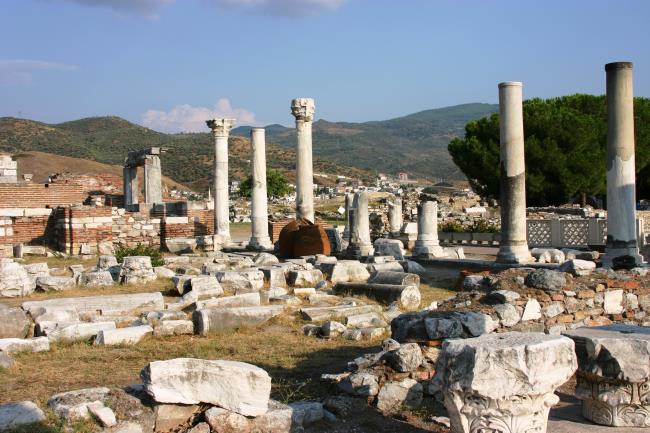
The one scene Luke describes in full happened in the Great Theater, the building in the photograph at the top of this page. A silversmith named Demetrius, who made silver shrines of Artemis, warned his fellow craftsmen that Paul’s preaching was hurting their trade. The crowd seized two of Paul’s traveling companions, Gaius and Aristarchus, and rushed into the theater, where for about two hours they shouted “Great is Artemis of the Ephesians!” (Acts 19:23–41). Paul wanted to go in and face them. His friends would not let him. In the end the town clerk calmed the crowd and sent everyone home.
Looking back on those years, Paul told the Corinthians about “our affliction which happened to us in Asia,” when “we despaired even of life.” Then he adds a line that is easy to miss: God delivered him, and would again, “you also helping together on our behalf by your supplication” (2 Corinthians 1:8–11). Paul believed the prayers of Christians far away had a part in his rescue. That is the whole reason to pray for persecuted Christians.
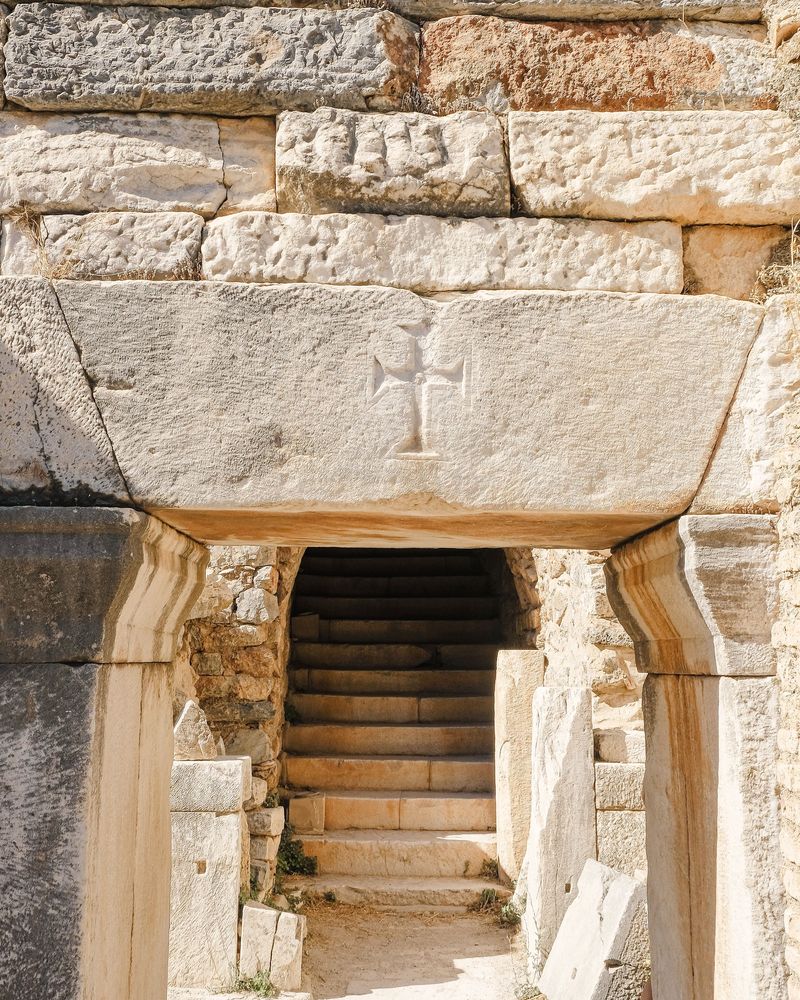
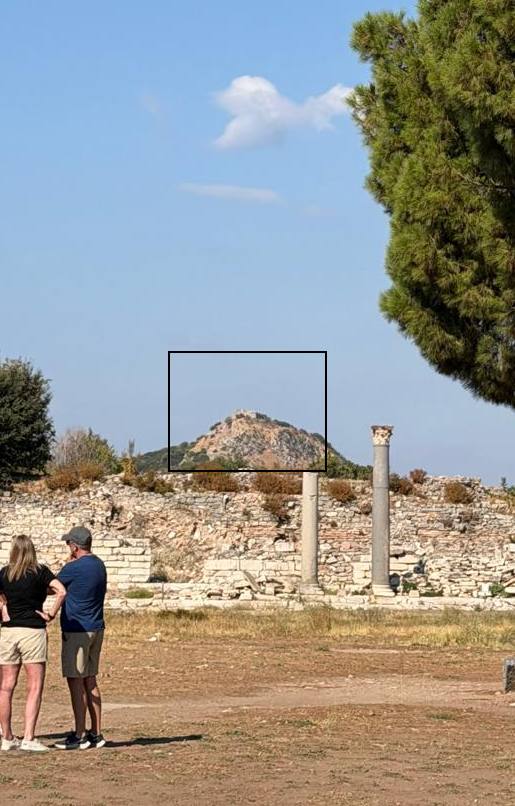
Whether those dangers ever put Paul in a cell in Ephesus itself, the Bible does not say, but a tower of the city’s Hellenistic walls on the hill to the west has long been called “St. Paul’s Prison,” a name that comes from local tradition, not from evidence.
What were the causes of Christian persecution in Asia Minor?
In the first centuries, persecution in Asia Minor was mostly local and came in waves. The riot at Ephesus was about money and civic pride: a trade that lived off the temple of Artemis felt threatened. About sixty years later, around AD 112, Pliny the Younger, governor of Bithynia-Pontus in the north of Asia Minor, wrote to the emperor Trajan about Christians brought before him. Anyone who denied being a Christian had to offer incense and wine to the emperor’s image and curse Christ. Those who kept confessing he had executed, because, he wrote, “stubbornness and inflexible obstinacy surely deserve to be punished.” In the same letter he noted that the temples, which had been almost deserted, were filling again, and that sacrificial animals were finding buyers.
So the pressure came from two directions at once: Christians would not worship the gods or the emperor, and people whose living depended on that worship felt the loss. The first empire-wide persecution came later, in 250, when the emperor Decius ordered everyone to sacrifice to the gods in front of an official. Ephesus remembered that time in its own way. The legend of the Seven Sleepers, seven young Christians who hid in a cave outside the city and woke two centuries later, is set in the reign of Decius.
Paul’s own request: an ambassador in chains
The letter to the Ephesians ends with a request for prayer. Paul asks for it “on my behalf,” and then he says what to pray for:
with all prayer and requests, praying at all times in the Spirit, and being watchful to this end in all perseverance and requests for all the saints: on my behalf, that utterance may be given to me in opening my mouth, to make known with boldness the mystery of the Good News, for which I am an ambassador in chains; that in it I may speak boldly, as I ought to speak.
Ephesians 6:18–20 · World English BibleHe could have asked for his chains to come off. He asked for courage instead. He makes the same request in Colossians 4:3–4, and he closes that letter in his own hand with three words: “remember my bonds.” Elsewhere he does ask to be rescued, “that we may be delivered from unreasonable and evil men” (2 Thessalonians 3:2), so both prayers are right. But the first thing he wanted was not to lose his nerve or his voice. Our page on Paul’s prayers in Ephesians shows what he prayed for other people from that same prison.
Two more voices from Ephesus fill out the picture. In his last letter Paul thanks God for Onesiphorus, “for he often refreshed me, and was not ashamed of my chain,” and reminds Timothy “in how many things he served at Ephesus” (2 Timothy 1:16–18). And around AD 107–110, Ignatius of Antioch, being marched in chains to his death in Rome, wrote to the Christians of Ephesus. He called his chains “spiritual jewels” and hoped to rise “through your prayers.” His letter ends: “Remember me… Pray for the Church which is in Syria” (Ignatius, To the Ephesians 11 and 21). A prisoner asking a free church to pray for the church he had left behind: that is still the shape of this prayer.
A prayer for persecuted Christians, in Paul’s words
This prayer follows Paul’s requests in order. It takes about a minute to say. Where it says “them,” you can name a country, a church or a person you have read about.
Lord Jesus Christ, you were arrested, beaten and put to death, and you know what our brothers and sisters are suffering today. For every Christian in prison, give them words. Open their mouths to speak boldly, as Paul asked, and let fear not have the last word. Deliver them from those who wish them harm, as you delivered Paul in Asia when he despaired of life. Strengthen them inside by your Spirit, where no guard and no threat can reach. Do not let them feel forgotten. Send them someone who is not ashamed of their chains. Keep their families safe, and the churches they had to leave. Bless those who persecute them, and turn their hearts, as you turned Saul’s. And when you answer, let many give thanks. We pray as bound with them, because we are one body. Amen.
Based on Ephesians 6:19–20, 2 Corinthians 1:8–11, Hebrews 13:3 and Matthew 5:44Six things to pray for, with the verses behind them
If you would rather pray one request at a time, here are the prayer points in the prayer above, each with the verse it comes from.
- Courage to speak. Paul’s first request from prison: “that I may speak boldly, as I ought to speak” (Ephesians 6:20). Pray it for pastors, converts and anyone questioned about their faith.
- Rescue. “Pray for us… that we may be delivered from unreasonable and evil men” (2 Thessalonians 3:1–2). When Peter was in prison, “constant prayer was made by the assembly to God for him” (Acts 12:5).
- Strength inside. Paul prayed that believers would be “strengthened with power through his Spirit in the inner person” (Ephesians 3:16). Christians have long joined their own suffering to prayer for others; our page on the stigmata of Anne Catherine Emmerich tells how one bedridden nun offered hers.
- Not to be forgotten. “Remember those who are in bonds, as bound with them” (Hebrews 13:3). Pray for visitors, lawyers and friends like Onesiphorus, who was “not ashamed” of Paul’s chain.
- Families and churches left behind. Ignatius, on the road to his death, asked the Ephesians to pray for his church in Syria rather than for himself. Pray for husbands, wives and children waiting at home, and for congregations meeting in secret.
- Those who persecute them. “Pray for those who mistreat you and persecute you” (Matthew 5:44). Paul himself had once been Saul, the young man at whose feet the witnesses laid their coats while Stephen was stoned (Acts 7:58).
Close with thanks. Paul wanted the answer to his rescue to become “thanks… given by many persons” (2 Corinthians 1:11), and gratitude is part of the prayer, not an extra.
Praying for persecuted Christians around the world
Many churches set aside one Sunday a year for this prayer. The International Day of Prayer for the Persecuted Church is usually kept on the first Sunday of November, which in 2026 falls on Sunday, November 1, and some churches continue it through the whole month. The numbers behind it are large. Open Doors’ 2026 World Watch List, reported by Vatican News, counts 388 million Christians facing high levels of persecution, 8 million more than the year before.
Numbers that large can make prayer feel small. It helps to pray the way Paul did, one name and one need at a time. If you pray at Mass or in a church service, a single intercession is enough: For Christians who suffer for their faith, that the Lord will give them courage to speak, strength to endure and friends who do not forget them. Lord, hear our prayer.
Figures and dates last reviewed September 2026. Sources: Open Doors World Watch List 2026 via Vatican News; the International Day of Prayer date as published by its organizers.
Send a prayer for those in chains
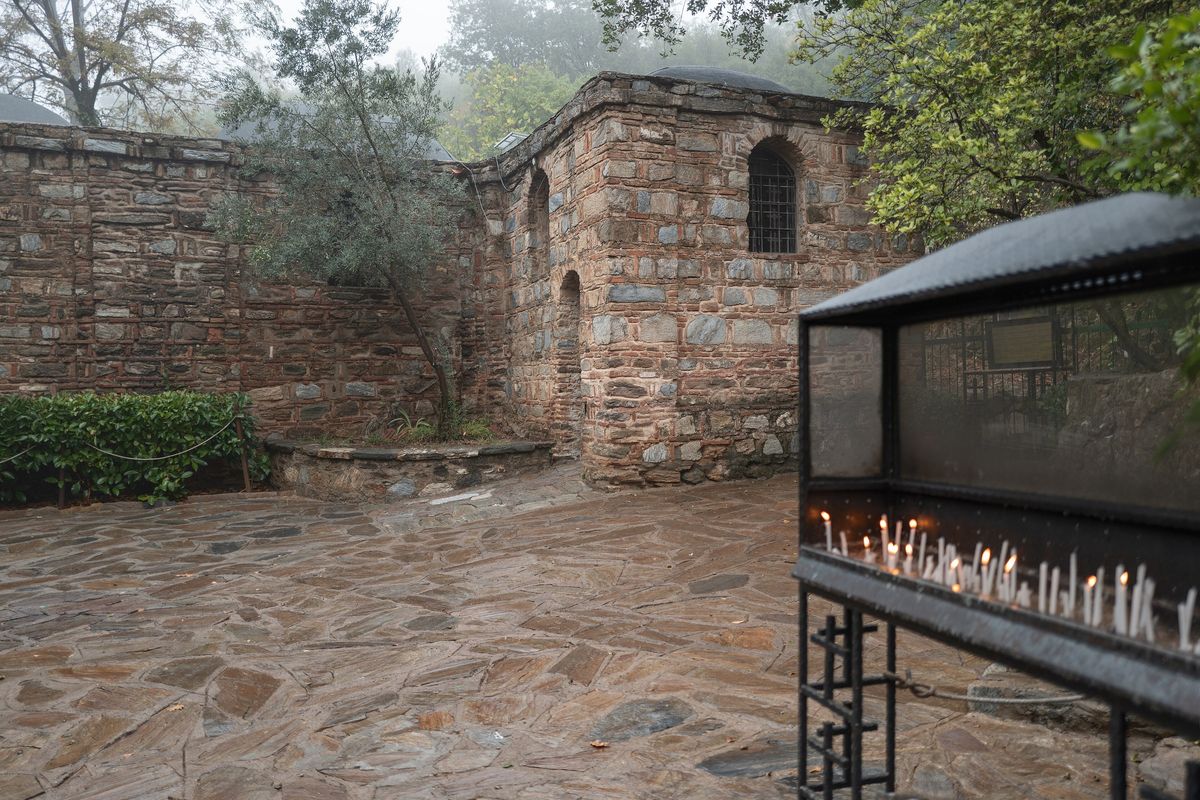
Paul wrote to Ephesus from prison and asked the church there to pray. Two thousand years later, prayers still come to the same place. Our family carries the prayers people send us up the mountain to the House of Virgin Mary, a short drive from the theater where the riot happened, and places them on the wishing wall. There your prayer “for those in chains” rests among thousands of others.
Sources & further reading
- Ephesians 6: “an ambassador in chains” (6:18–20) — Bible Gateway, World English Bible
- Acts 19: the riot in the theater at Ephesus — Bible Gateway, World English Bible
- 2 Corinthians 1: Paul’s affliction in Asia and the prayers that helped (1:8–11) — Bible Gateway, World English Bible
- Ignatius of Antioch, Letter to the Ephesians — New Advent, Ante-Nicene Fathers translation
- Pliny the Younger to Trajan on the Christians (Letters 10.96–97) — Georgetown University, J. J. O’Donnell
- Open Doors: number of Christians persecuted worldwide rises to 388 million — Vatican News, 15 January 2026
- International Day of Prayer for the Persecuted Church — Wikipedia
Church tradition says Timothy, the first bishop of Ephesus, died around AD 97 after trying to stop the Katagogia, a masked street procession. The festival itself is real: an Ephesian statue base of AD 149–150 is dated “on the day of the Katagogia.”
“Remember those who are in bonds, as bound with them; and those who are ill-treated, since you are also in the body.”
Hebrews 13:3
People often ask
What is a short prayer for persecuted Christians? ▾
Try this, based on Ephesians 6:19–20 and Hebrews 13:3: “Lord, give our persecuted brothers and sisters courage to speak, strength to endure and friends who do not forget them. Deliver them, bless those who harm them, and let us remember them as if we were bound with them. Amen.” It takes about fifteen seconds and can be prayed every day.
Was Paul imprisoned in Ephesus? ▾
Possibly, but the Bible never says so directly. Acts does not mention a jail in Ephesus. Paul’s own letters speak of many imprisonments (2 Corinthians 11:23) and of a near-fatal ordeal “in Asia” (2 Corinthians 1:8), and many scholars think he wrote Philemon, and perhaps Philippians and Colossians, from an Ephesian cell. A tower of the city’s Hellenistic walls on Bülbüldağ has long been called “St. Paul’s Prison,” but that name is a local tradition, not evidence.
Where did the Christian persecutions start in Ephesus? ▾
In the Great Theater, as far as the written record goes. Acts 19 describes a riot in the mid-50s AD started by Demetrius the silversmith, when a crowd dragged Paul’s companions Gaius and Aristarchus into the theater and chanted for about two hours. Nobody was killed, and the town clerk sent the crowd home, but it is the first recorded public violence against the Christians of Ephesus.
When is the International Day of Prayer for the Persecuted Church in 2026? ▾
Sunday, November 1, 2026. The day is usually kept on the first Sunday of November, and many churches and organizations continue the prayer through the rest of the month.
Is there a Catholic prayer for persecuted Christians? ▾
Yes. Many parishes add an intercession to the Prayer of the Faithful at Mass, for example: “For Christians who suffer for their faith, that the Lord will give them courage to speak, strength to endure and friends who do not forget them. Lord, hear our prayer.” The prayer on this page, built from Scripture, can be prayed by Catholics and all other Christians alike.
Can I send a prayer for persecuted Christians I don’t know by name? ▾
Yes. Most people who pray for persecuted Christians do not know them personally. Write “for the Christians in prison for their faith” or name a country or a church you have read about. Send it to us and we will place it on the wishing wall at the House of Virgin Mary near Ephesus, free of charge.
Continue the story
Paul’s Prayers in Ephesians
Two prayers from Ephesians 1 and 3, turned into a one-minute daily prayer for yourself or someone you love.
Keep reading →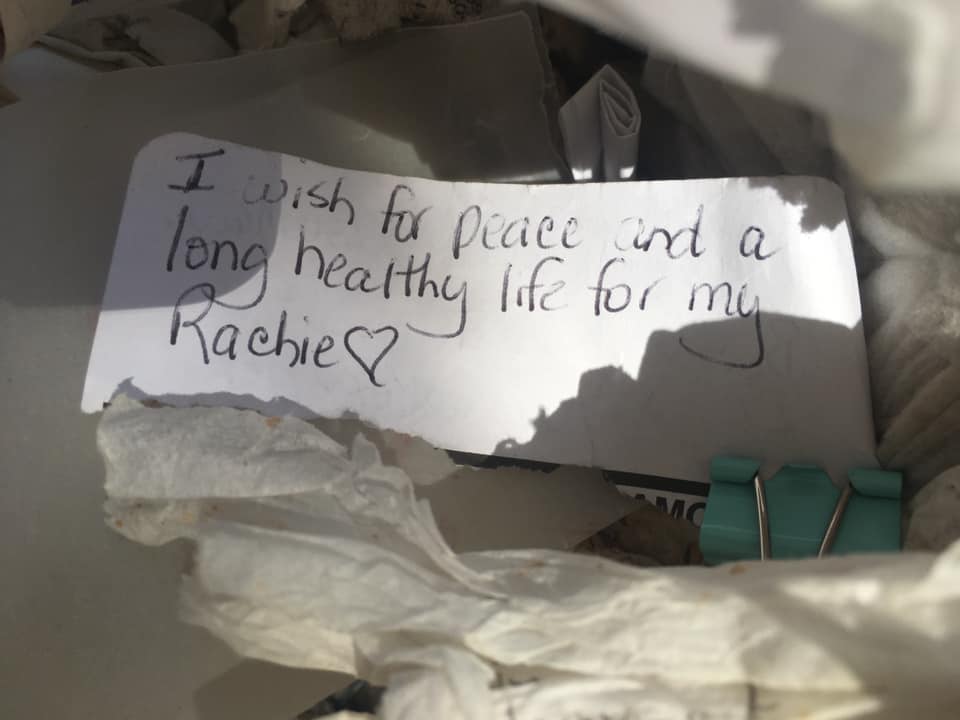
How to send a prayer request
What to write, how to send it, and exactly what happens after you press send.
Step by step →
The Wishing Wall
Thousands of folded prayers on one wall — the tradition your prayer becomes part of.
Discover the tradition →For those in chains. We will carry it.
Send a prayer for persecuted Christians, with a name or without one. We will place it on the wishing wall below the House of Virgin Mary near Ephesus, free of charge, in any language.
Send my prayer nowFree · No donations asked · Any language · Placed by our family in person