
Clemens Brentano: The Poet at the Bedside
Clemens Brentano (1778–1842), one of the founding voices of German Romanticism, came to Anne Catherine Emmerich’s bedside in Dülmen in 1818 meaning to stay two weeks, and stayed nearly six years writing down her visions. Those notebooks became The Life of the Blessed Virgin Mary, published in 1852, whose Ephesus pages led two priests to Mary’s house in 1891.
Written by Hasan Gülday · the Gülday family, Ephesus
A restless Romantic
Clemens Brentano was born on 9 September 1778 in Ehrenbreitstein, near Koblenz, into one of the most remarkable literary families of Germany — his sister Bettina von Arnim became a celebrated writer in her own right. Together with his friend Achim von Arnim, Brentano collected and published Des Knaben Wunderhorn (“The Boy’s Magic Horn”), a landmark collection of German folk songs and poems that later inspired composers such as Gustav Mahler.
He was, by every account, a dazzling and difficult man: witty, generous, impulsive, forever falling in and out of love, forever moving from city to city. Fame came early. Peace did not come at all.
A conversion of the heart
By his late thirties, Brentano was exhausted by his own restlessness. In 1817 he returned to the Catholic faith of his childhood with the full intensity of his nature — the same passion that had gone into poetry now went into prayer. And like many converts, he began looking for something worth giving his gifts to.
He found it in the most unlikely place: a sickroom in the small Westphalian town of Dülmen, where a bedridden Augustinian nun named Anne Catherine Emmerich was said to see visions of the life of Christ — and to bear the wounds of Christ on her body.
Five years, thousands of pages
Brentano arrived in Dülmen in 1818, intending a short visit. He stayed until Emmerich’s death in 1824. Almost every day he sat beside her bed, listening as the visions poured out — scenes from the Passion of Christ, from the life of the Virgin Mary, from the world of the apostles — and every evening he wrote, filling notebook after notebook in his fast poet’s hand. It became the great work of his life: tens of thousands of manuscript pages.

From those notebooks came the books that carried Emmerich’s visions into the world: The Dolorous Passion of Our Lord Jesus Christ (1833) and, published after Brentano’s death, The Life of the Blessed Virgin Mary (1852). It was in the second book that readers found the careful description of a small stone house on a mountain above Ephesus — the description that sent searchers up Bülbül Mountain in 1881 and 1891.
The scribe’s fingerprints
We tell this story honestly, because it deserves honesty: scholars have long debated how much of the published text is Emmerich’s voice and how much is Brentano’s literary shaping. He was a poet, after all, and poets polish. Some passages may owe as much to his pen as to her visions.
Brentano died in Aschaffenburg on 28 July 1842, still working over the manuscripts. He never saw Ephesus, never knew what his notebooks would one day help find. Like a true scribe, he simply wrote it down and trusted the words to find their way. They did — all the way to a mountain in Turkey, where pilgrims now leave their own written words on a wall of prayers.
Sources & further reading
- Clemens Brentano — Romantic Poet, Novelist & Lyricist — Encyclopaedia Britannica
- Des Knaben Wunderhorn — Encyclopaedia Britannica
- The Dolorous Passion of Our Lord Jesus Christ — Encyclopaedia Britannica
- The Life of the Blessed Virgin Mary (1852) — the posthumous book — full text, Internet Archive
Songs Brentano collected in Des Knaben Wunderhorn were later set to music by Gustav Mahler — so the poet who recorded the visions of Mary’s house also shaped some of the most beloved symphonies ever written.
“Write down the revelation and make it plain on tablets, so that a herald may run with it.”
Habakkuk 2:2
Continue the story
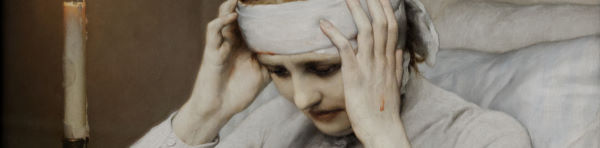
Anne Catherine Emmerich
The bedridden nun whose visions found Mary’s house — without her ever leaving Germany.
Keep reading →
The Discovery of the House
How two skeptical priests followed a book up a mountain in 1891 — and found the ruin it described.
Keep reading →
Restoration of the House
From a roofless ruin to a living shrine that welcomes a million pilgrims every year.
Keep reading →Some words are written to be carried
Brentano wrote down a nun’s visions and they found a house. Write down your prayer — we will carry it to the wishing wall in that house’s garden.
Send my prayer nowFree · No donations asked · Any language · Placed by our family in person