
The Wishing Wall
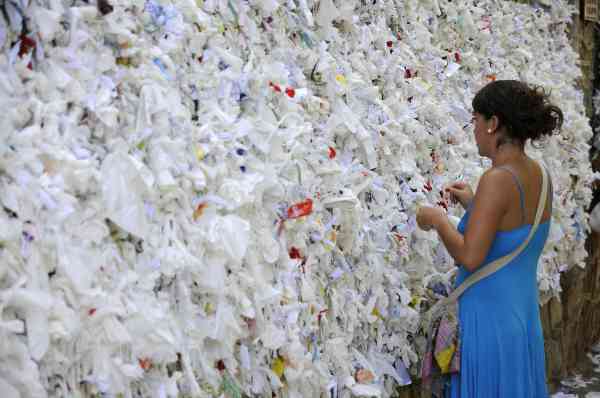
The wishing wall is a long stone wall in the lower garden of the House of Virgin Mary, about 7 km from ancient Ephesus, covered with thousands of folded paper prayers. Pilgrims of every faith tie theirs there free of charge. If you cannot travel, send yours and our family will place it on the wall on our next visit.
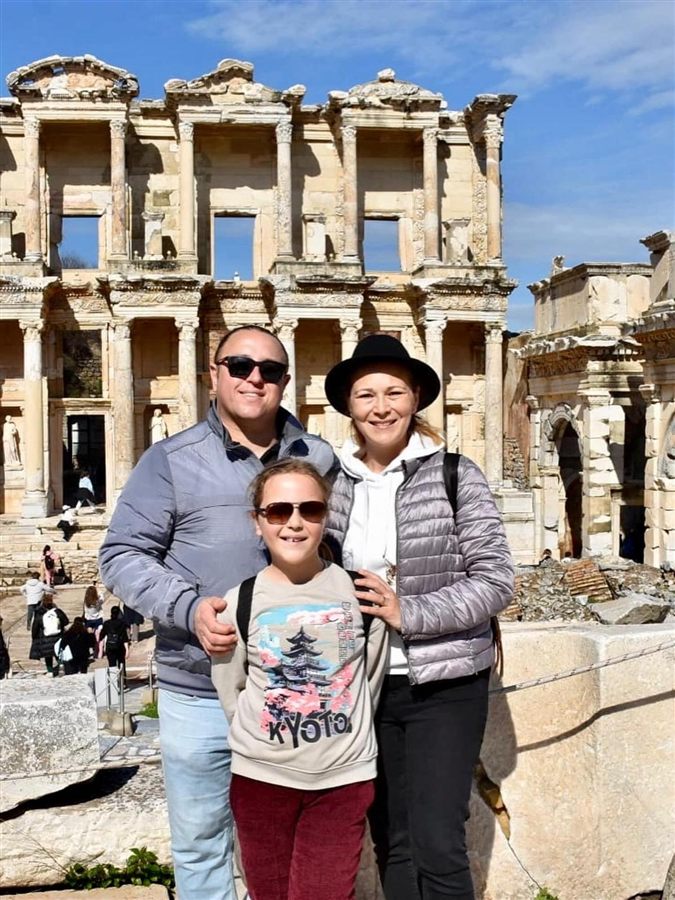
Written by Hasan Gülday · the Gülday family, Ephesus
What is the wishing wall at the House of Virgin Mary?
The wishing wall — also called the prayer wall — is a wall in the lower garden of the House of Virgin Mary near Ephesus, Turkey, where pilgrims leave folded handwritten prayers. Anyone may leave one free of charge, and Prayers Unchained places prayers there for people who cannot travel.
A wall built of hopes
At the lower side of the House of Virgin Mary stands a beautiful wall, covered with thousands of little pieces of paper carrying handwritten wishes. Some are tied with ribbon; some are folded small enough to hide a secret; some carry only a single name. Together they form something remarkable — a wall built not of stone, but of hope.
Local people believe that any wish made with purity of heart will come true in the presence of Virgin Mary. She is deeply respected by Christians and Muslims alike, which is why people of every faith and every nation come here to pray — every year, hundreds of thousands of them, to a shrine set within the UNESCO World Heritage area of Ephesus and honored by three papal visits.

How the tradition began
Many visitors say their prayers came true soon after their visit — and word of this traveled home with every pilgrim. Over the years it became a beloved tradition to write prayers on small pieces of paper and place them on the wall, including on behalf of loved ones who could not be there. The wall’s fame grew together with the shrine itself — a ruin found in 1891 by following a nun’s visions, then lovingly restored over a century. When Pope Benedict XVI prayed here in 2006, his homily carried the same message the wall has always whispered: “He, Christ, is our peace.”
That last part — prayers for the absent — is the heart of our initiative. If prayers have always been left at the wall for loved ones who could not come, then no one on earth should be excluded from it: not by distance, not by health, not by hardship. Whoever you are, wherever you are, the wall has room for your words too.
What people write
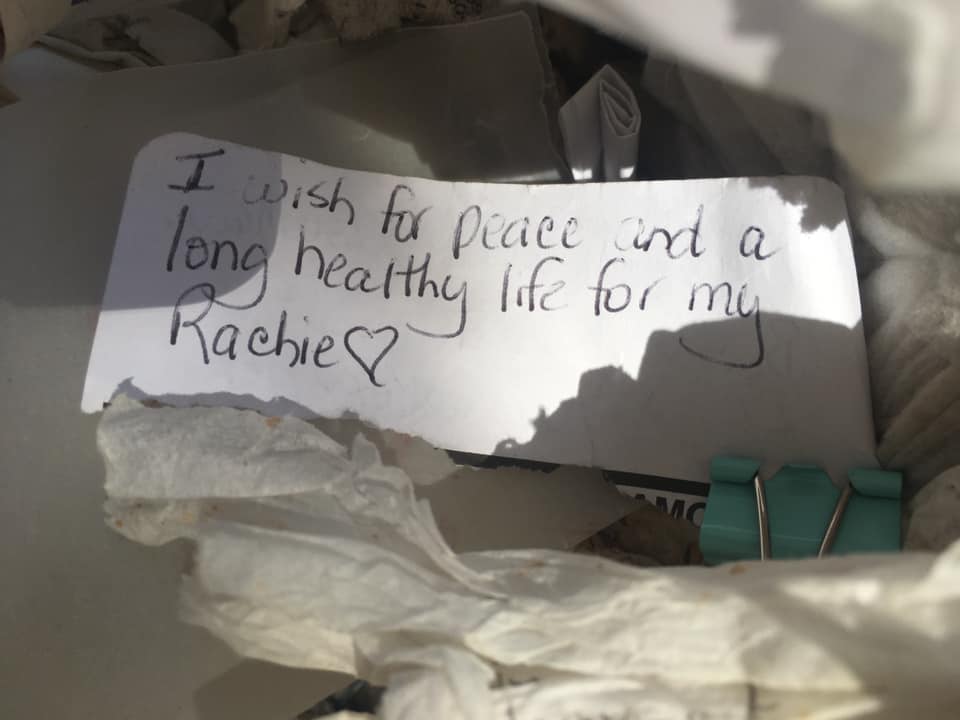
Health, mostly. A parent, a child, a diagnosis. Then work, and homes, and exams. Then love — found, lost, hoped for. Thank-yous, more than you would expect. Farewells. And a surprising number of notes that ask for nothing at all: “peace,” “for everyone here,” a name and a heart. Every language on earth is on this wall; every kind of handwriting; every age. It is the most honest library in the world.
What happens after you send yours
When your prayer reaches us through the form on our home page — or by e-mail — we prepare it with reverence, and on our next visit to the House of Virgin Mary we place it on the wall ourselves. On our social pages we share moments from the wall, so you can see where your hope now lives. Here is the whole process, step by step.
Sources & further reading
- Ephesus — UNESCO World Heritage List — official listing, includes the House of the Virgin Mary
- Ephesus — Ancient City, Turkey — Encyclopaedia Britannica
- House of the Virgin Mary — Wikipedia
No two notes on the wishing wall look alike: some are tied with ribbon, some folded into tiny squares, some carry only a single name — written in languages from every corner of the world.
“Therefore I tell you, whatever you ask for in prayer, believe that you have received it, and it will be yours.”
Mark 11:24
“I sent a prayer of gratitude — nothing asked, only thanks for the love that found me late in life. Seeing our two names resting together on that white wall of hope in Ephesus was the most romantic gift anyone has ever given us. We felt blessed beyond words.”
Elena & Miguel · Seville, Spain
What people ask about the wall
Can I put a prayer on the wishing wall without going to Ephesus? ▾
Yes. Send your prayer through the form on our home page and our family places it on the wishing wall at the House of Virgin Mary on our next visit — free of charge, in any language.
Is the prayer wall the same as the wishing wall? ▾
Yes. People search for both names, and both mean the same wall in the lower garden of the House of Virgin Mary, beside the holy water spring. It is also called the wall of prayers.
Where exactly is the wishing wall? ▾
It stands in the lower garden of the House of Virgin Mary on Nightingale Mountain (Bülbül Dağı) above Ephesus, right beside the holy water spring.
What do people write on the wishing wall? ▾
Health, mostly — a parent, a child, a diagnosis. Then work, homes and exams, then love. There are more thank-yous than you would expect, and a surprising number of notes that ask for nothing at all beyond peace.
Do you have to be Catholic to leave a prayer? ▾
No. The Virgin Mary is honored by Christians and deeply respected by Muslims (Meryem Ana), and people of every faith — and people still searching — leave prayers on this wall. No one is turned away.
Around the wall
How to send a prayer request
What to write, how to send it, and exactly what happens after you press send.
Step by step →
The Holy Water Spring
The spring that led the discoverers to the house — and still fills pilgrims’ bottles today.
About the spring →
Photos of the House
The chapel, the garden, the wall, the spring — and a pilgrim in 1962.
See the photos →Add your prayer to the wall
Write it for yourself, or for someone you love. We will carry it the rest of the way.
Send my prayer nowFree · No donations asked · Any language · Placed by our family in person