
How to Pray Paul’s Prayers in Ephesians
Paul’s prayers in Ephesians are two short intercessions, one in chapter 1 and one in chapter 3. Read slowly, line by line, they become a daily prayer you can say for yourself in a minute, or for someone you love when you have no words of your own.
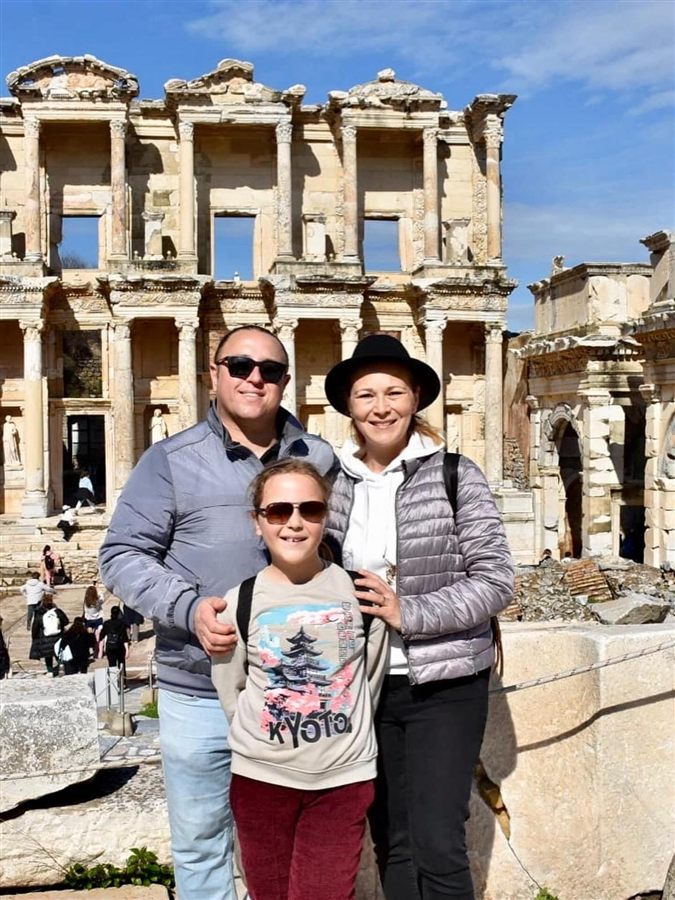
Written by Hasan Gülday · the Gülday family, Ephesus
How many prayers did Paul pray in Ephesians?
Two. The first is Ephesians 1:15–23, where Paul asks God to open the eyes of the heart so believers can see their hope, how much God treasures them, and his power. The second is Ephesians 3:14–21, where he kneels and asks for inner strength, a heart where Christ is at home, and a love too big to measure.
The letter holds more prayer than those two passages. It opens with a long hymn of blessing (1:3–14), the second prayer ends in a burst of praise (3:20–21), and the last chapter asks readers to keep “praying at all times in the Spirit… for all the saints,” and for Paul himself (6:18–20). But when people talk about Paul’s prayers in Ephesians, they mean the two intercessions, and those are the ones this page turns into a prayer of your own.
Why Paul prayed for the Ephesians
Paul knew this church well. By his own count he spent about three years in Ephesus, teaching “night and day with tears” (Acts 20:31). When he said goodbye to its elders at Miletus, “he knelt down and prayed with them all” (Acts 20:36). The kneeling man of Ephesians 3 is the same man.
He writes as “the prisoner of Christ Jesus” (3:1) and calls himself “an ambassador in chains” (6:20). What stands out is what he does not ask for. There is no request for his release, and no request that his readers be spared hardship. He prays that they will see clearly and be strong inside. That is why these prayers still fit a hospital corridor or a sleepless night.
One honest note. Some important early manuscripts leave the words “in Ephesus” out of the first verse, so many scholars think the letter was sent around several churches of the region, as the USCCB introduction to Ephesians explains. Scholars also debate whether Paul wrote it himself, through a secretary, or whether a later disciple shaped it from his teaching. None of that changes the prayers. Christians have prayed them for close to two thousand years, and they still read as if they were written for whoever is reading.
Paul’s prayer in Ephesians 1:15–23, line by line
Here is the heart of the first prayer in the World English Bible, a public-domain translation, followed by what each line asks and a way to pray it today.
that the God of our Lord Jesus Christ, the Father of glory, may give to you a spirit of wisdom and revelation in the knowledge of him, having the eyes of your hearts enlightened, that you may know what is the hope of his calling, and what are the riches of the glory of his inheritance in the saints, and what is the exceeding greatness of his power toward us who believe
Ephesians 1:17–19 · World English Bible“A spirit of wisdom and revelation in the knowledge of him”
Paul does not ask that they know more about God. He asks that they know him, the way you know a friend rather than a biography. Wisdom here is practical: seeing your own life the way God sees it.
Pray it: Father of glory, give me wisdom today, so that I know you and not only facts about you.
“Having the eyes of your hearts enlightened”
Some things can only be seen from the inside. Paul prays for light in the place where decisions are made and where fear lives. Everything else in the prayer depends on this line.
Pray it: Open the eyes of my heart. Let me see what is true, not only what I am afraid of.
“The hope of his calling”
Hope in the Bible is not a wish. It is something already promised and still on its way. Paul wants his readers to know where their lives are headed, because people who know the destination can walk a hard road.
Pray it: Show me the hope you have called me to, especially on the days I cannot feel it.
“The riches of the glory of his inheritance in the saints”
Read it closely: his inheritance in the saints. Many commentators take this as God’s own inheritance, meaning his people are what he treasures. For a lot of readers it is the hardest line in the prayer to believe about themselves.
Pray it: Teach me how precious your people are to you, and that I am one of them.
“The exceeding greatness of his power toward us who believe”
Paul measures this power by one event. It is the power God “worked in Christ when he raised him from the dead” (1:20). The prayer asks that believers grasp that the same power is turned toward them, not toward some stronger person somewhere else.
Pray it: Let me trust that the power that raised Jesus from the dead is at work in my life today.
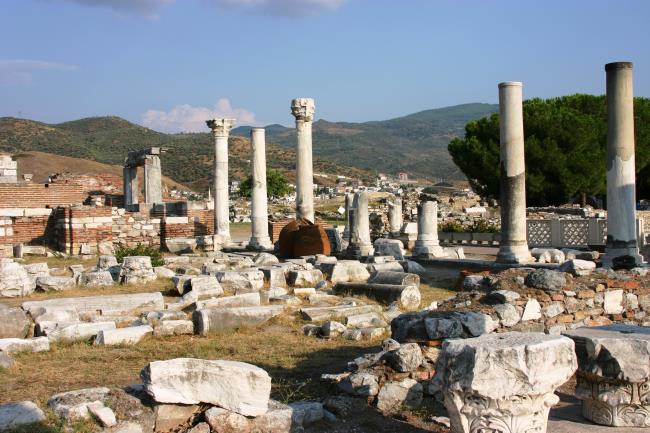
Paul’s prayer in Ephesians 3:14–21, line by line
The second prayer opens with “For this cause,” picking up a sentence Paul began at the start of chapter 3 and broke off. It is warmer than the first, and more physical. He is on his knees.
For this cause, I bow my knees to the Father of our Lord Jesus Christ, from whom every family in heaven and on earth is named, that he would grant you, according to the riches of his glory, that you may be strengthened with power through his Spirit in the inner person, that Christ may dwell in your hearts through faith, to the end that you, being rooted and grounded in love, may be strengthened to comprehend with all the saints what is the width and length and height and depth, and to know Christ’s love which surpasses knowledge, that you may be filled with all the fullness of God.
Ephesians 3:14–19 · World English Bible“I bow my knees to the Father”
Jews of Paul’s day often prayed standing; Jesus himself says “whenever you stand praying” (Mark 11:25). Kneeling showed unusual earnestness. You do not have to kneel to pray this line, but it helps to begin where Paul began: small, and asking.
Pray it: Father, I come to you on my knees, even if only in my heart.
“From whom every family in heaven and on earth is named”
In Greek this is a play on words. God is Patēr, Father, and every family is a patria. The family you were born into and the one you have made both take their name from him. This is the natural place to say the names of the people you are praying for.
Pray it: You are the Father every family is named after. I bring you mine — then say their names.
“Strengthened with power through his Spirit in the inner person”
Not easier circumstances, a stronger inside. It is a prayer for the part of a person nobody else sees: the patience that runs out late at night, the courage needed before a difficult phone call.
Pray it: Strengthen me inside, where no one else can see, with the power of your Spirit.
“That Christ may dwell in your hearts through faith”
The verb Paul uses, katoikeō, is built on the Greek word for a house. It means to settle in and live somewhere for good, not to drop in as a guest. On this website that picture lands close to home: we carry prayers up the mountain to the House of Virgin Mary, a small stone home near Ephesus, and Paul prays that every heart becomes a home like that for Christ.
Pray it: Lord Jesus, do not be a visitor in my heart. Make your home there.
“Rooted and grounded in love”
Two pictures in a few words: a tree with deep roots and a building on firm ground. Love is not the reward at the end of this prayer. It is the soil everything else grows in.
Pray it: Root me in your love, so that when the wind comes I stay standing.
“The width and length and height and depth… Christ’s love which surpasses knowledge”
Paul asks for the impossible on purpose: to know a love that is beyond knowing. And he asks that believers grasp it “with all the saints.” Nobody measures this love alone.
Pray it: Show me how wide and long and high and deep your love is, together with everyone who loves you.
“Filled with all the fullness of God”
The prayer ends where no request could go further, then turns into praise to the God “who is able to do exceedingly abundantly above all that we ask or think” (3:20). Paul has just asked for a great deal. He finishes by admitting God can do more.
Pray it: Fill me with yourself. You can do far more than I have asked or imagined. Glory to you, forever. Amen.
Turning Paul’s prayers in Ephesians into one daily prayer
Put the lines together and you have a prayer that takes about a minute to say. It works in the morning before the phone comes out, or at night when the house is quiet.
Father of glory, give me a spirit of wisdom, so that I know you. Open the eyes of my heart. Show me the hope you have called me to, how precious your people are to you, and the power that raised Jesus from the dead, at work in me today. I bow before you, Father of every family. Strengthen me inside by your Spirit. Let Christ make his home in my heart through faith. Root me and ground me in love, and let me know, with all your people, the love of Christ that is wider, longer, higher and deeper than I can understand. Fill me with all your fullness. To you, who can do far more than I ask or imagine, be glory in the Church and in Christ Jesus, for all generations, forever and ever. Amen.
Based on Ephesians 1:17–19 and 3:14–21If you would rather go slowly, pray one line a day. The two prayers hold about a dozen requests between them, and after a few weeks you will know them by heart without trying. For prayers you can say alongside them, see our page of prayers to the Virgin Mary.
How to pray the Ephesians prayer for someone else
Paul wrote both prayers for other people, so they are natural prayers of intercession. The simplest way is to take the Bible’s own wording, where Paul says “you,” and put in a name: that the Father of glory may give Maria a spirit of wisdom; that Christ may make his home in David’s heart. A few habits help:
- Match the line to the need. For someone facing a decision, pray for wisdom and open eyes (1:17–18). For someone worn down by illness or grief, pray for strength in the inner person (3:16). For a marriage or a family under strain, pray the line about every family being named by the Father (3:15).
- Pray one request a day. One line, repeated for a week, is easier to keep than all twelve at once.
- Tell the person, if it is welcome. “I prayed Ephesians 3:16 for you today” is a short message that often means more than a long one.
- Keep the ending. Finish with 3:20–21. Praying for someone is a way of admitting you cannot fix it yourself, and those two verses say so out loud.
Not sure how to put the need into words? Our guide on how to send a prayer request walks you through it.
Sources & further reading
- Ephesians 1: the first prayer (1:15–23) — Bible Gateway, World English Bible
- Ephesians 3: the second prayer (3:14–21) — Bible Gateway, World English Bible
- Introduction to the Letter to the Ephesians — New American Bible (Revised Edition), USCCB
- General Audience on Ephesians 1:3–14, “He chose us” — Pope Benedict XVI, Vatican.va, 6 July 2005
- Acts 20: Paul’s farewell to the elders of Ephesus — Bible Gateway, World English Bible
- Colossians 1: Paul’s parallel prayer (1:9–12) — Bible Gateway, World English Bible
Ephesians is prayed in the Church every week. The hymn of blessing that opens the letter (1:3–14) recurs at Evening Prayer in each of the four weeks of the Liturgy of the Hours, as Pope Benedict XVI pointed out in his general audience of 6 July 2005.
“Now to him who is able to do exceedingly abundantly above all that we ask or think, according to the power that works in us”
Ephesians 3:20
People often ask
Why did Paul pray for the Ephesians? ▾
Paul had spent about three years with the church in Ephesus (Acts 20:31) and wrote to believers there as a prisoner. Instead of praying for easier circumstances, he prayed that they would understand the hope and power they had in Christ and be strengthened inside by the Spirit, rooted in love.
Why did Paul pray in Ephesians 3, and why did he kneel? ▾
The prayer picks up the “For this cause” of 3:1, where Paul explains that non-Jewish believers are now “fellow heirs” of God’s promise (3:6), and asks his readers not to lose heart at his troubles in prison (3:13). He kneels because standing was a common posture for prayer among Jews of his time (see Mark 11:25), so “I bow my knees” signals unusual earnestness. Acts 20:36 also records Paul kneeling to pray with the elders of Ephesus at Miletus.
Are Paul’s prayers in Ephesians and Colossians the same? ▾
They are close cousins. Colossians 1:9–12 also asks for wisdom and spiritual understanding and for believers to be “strengthened with all power.” Ephesians 1 focuses on seeing the hope and power of God, while Ephesians 3 adds Christ living in the heart and a love that surpasses knowledge.
Can I pray Paul’s prayers for someone who is sick or struggling? ▾
Yes. Both prayers were written for other people. Put the person’s name where Paul says “you” and choose the line that fits: strength in the inner person (3:16) for illness or grief, wisdom and open eyes (1:17–18) for a hard decision. You can also send the prayer to us, and we will place it on the wishing wall at the House of Virgin Mary.
Continue the story

Prayers to the Virgin Mary
The Memorare, the Hail Mary, Sub Tuum Praesidium — for help, healing, protection and intercession.
Pray with us →
How to send a prayer request
What to write, how to send it, and exactly what happens after you press send.
Step by step →
The Wishing Wall
Thousands of folded prayers on one wall — the tradition your prayer becomes part of.
Discover the tradition →Pray it for them. We will carry it.
Write down the name and the need. We will place your prayer on the wishing wall at the House of Virgin Mary near Ephesus, free of charge, in any language.
Send my prayer nowFree · No donations asked · Any language · Placed by our family in person