
The Armor of God Prayer, Piece by Piece
An armor of God prayer names each of the six pieces in Ephesians 6:14–17 and asks God for what it stands for: truth, righteousness, peace, faith, salvation and his word. Said one line per piece, it takes about a minute. Paul ends the passage with prayer itself (6:18), so this page ends there too, with a way to pray it for someone else.
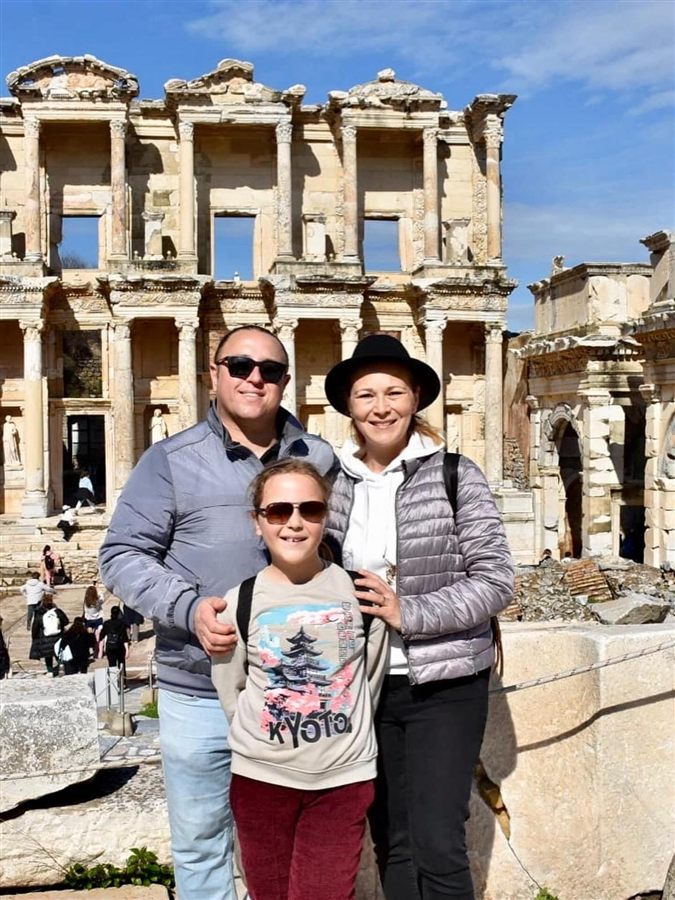
Written by Hasan Gülday · the Gülday family, Ephesus
On this page: How to pray it · One line per piece · Morning prayer · Family and children · Ephesians 6:18 · Catholic notes
How do you pray the armor of God?
You pray the armor of God by putting it on piece by piece, in Paul’s order: belt of truth, breastplate of righteousness, shoes of peace, shield of faith, helmet of salvation, sword of the Spirit. Name each piece, say what it stands for, and ask God for it.
There is no armor of God prayer printed word for word in the Bible. Ephesians 6:10–17 describes the armor, 6:18 tells readers to pray, and Christians have joined the two into a habit. Once you know it, it takes three steps:
- Start with Ephesians 6:10–11. Say it aloud: “Be strong in the Lord… Put on the whole armor of God.” It reminds you whose strength this is.
- Put on the six pieces, one line each, with the prayers below or your own words.
- Close with Ephesians 6:18. Pray for one other person by name, because that is where Paul’s list ends.
The armor of God in Ephesians 6:10–17
Ephesians 6:10 opens the passage with “be strong in the Lord,” and the next verse names the suit of armor. Paul’s Greek word for it, panoplia, means a complete set of armor, from shield to sword. Here are the six pieces in the World English Bible, a public-domain translation:
Stand therefore, having the utility belt of truth buckled around your waist, and having put on the breastplate of righteousness, and having fitted your feet with the preparation of the Good News of peace, above all, taking up the shield of faith, with which you will be able to quench all the fiery darts of the evil one. And take the helmet of salvation, and the sword of the Spirit, which is the word of God;
Ephesians 6:14–17 · World English BiblePaul did not invent most of these pieces. He took them from Isaiah, where God himself wears them: “He put on righteousness as a breastplate, and a helmet of salvation on his head” (Isaiah 59:17). In Isaiah the promised king wears righteousness as “the belt around his waist” (11:5), and the feet of the one who “publishes peace” are called beautiful (52:7). Catholic Bibles hold a close parallel in the Book of Wisdom, where God arms himself with righteousness, judgment, holiness and his own zeal (Wisdom 5:17–20).
That changes how the prayer feels. The armor is “of God” twice over: he gives it, and he wore it first. In an earlier letter Paul even used different labels, a “breastplate of faith and love” and a helmet that is “the hope of salvation” (1 Thessalonians 5:8). The metal matters less than what each piece stands for.
An armor of God prayer, one line for each piece
Each piece below has a short note on what it means and one line to pray. Say the line slowly. If a piece touches something in your day, stay with it a little longer.
1. The belt of truth (6:14)
Paul lists the belt first, and Isaiah gives the same belt to the coming king as faithfulness. Truth here means two things: the truth about God, which does not move when your feelings do, and plain honesty in your own words, in small things as well as large.
Pray it: Lord, fasten your truth around me. Keep me honest today, and hold me to what is true about you when my feelings say otherwise.
2. The breastplate of righteousness (6:14)
The breastplate covers the heart. In Paul’s letters righteousness is first a gift, being made right with God through Christ, and then a way of living. Many people pray this piece when old guilt, or someone else’s accusation, comes back.
Pray it: Cover my heart with your righteousness, not my own record. When guilt comes, let me stand in what Jesus has done.
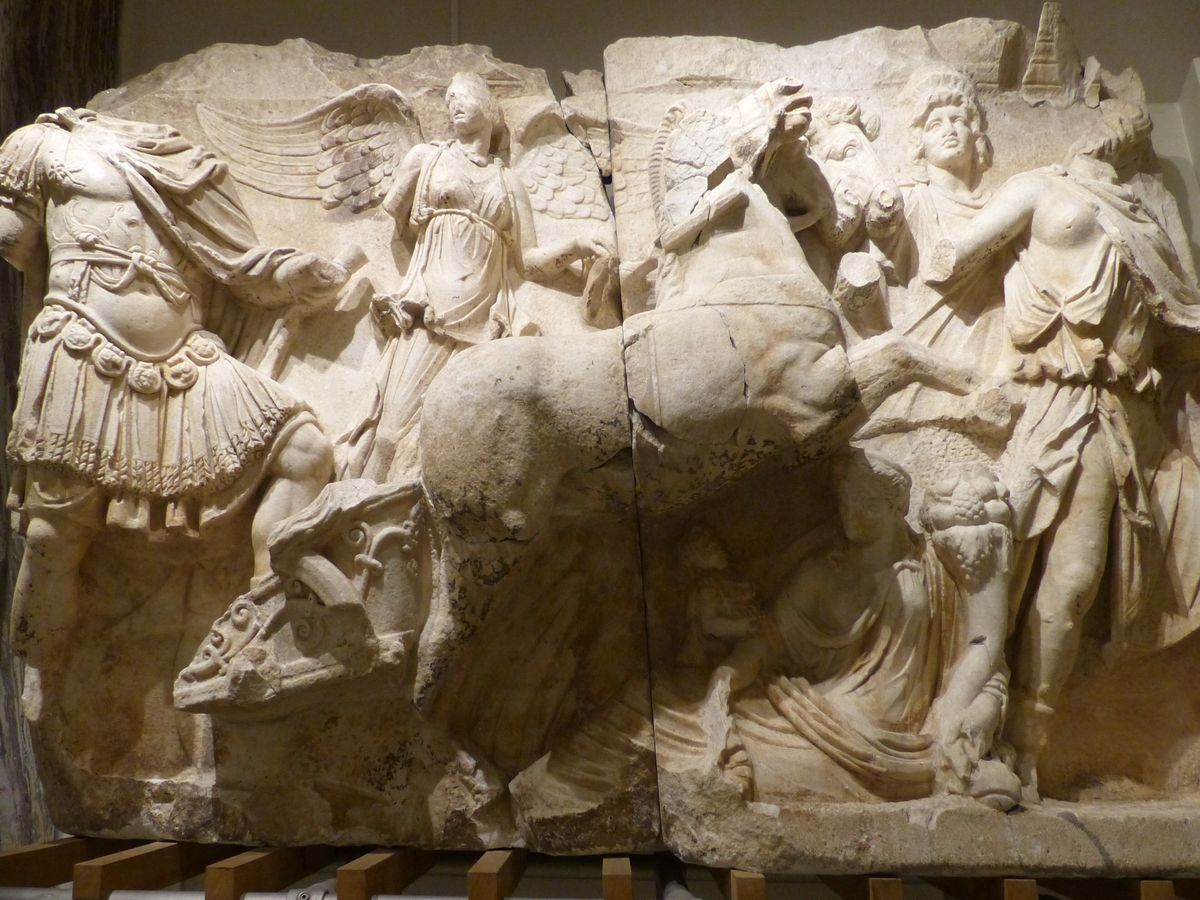
3. Feet ready with the Good News of peace (6:15)
This piece comes from Isaiah 52:7: “How beautiful on the mountains are the feet of him who brings good news, who publishes peace.” Footwear is about being ready to move and able to stand without slipping. The peace is peace with God first, and then the peace you carry into a tense kitchen, office or hospital room.
Pray it: Put your peace on my feet. Wherever I walk today, let me bring it with me, and keep me ready to speak of you.
4. The shield of faith (6:16)
Paul puts “above all” in front of this one. His word for the shield, thyreos, comes from thyra, “door”: a tall shield shaped like a door, not a small round one. Faith here is trust, and it covers the other pieces. The “fiery darts” are the thoughts that arrive in the middle of the night: fear, despair, the old lie that God has forgotten you.
Pray it: I take up the shield of faith. When fears and lies fly at me, let my trust in you put them out.
5. The helmet of salvation (6:17)
The helmet guards the head, so many readers take this piece as protection for the mind. In 1 Thessalonians Paul calls the same helmet “the hope of salvation”: not only that you have been saved, but that the end of the story is safe in God’s hands.
Pray it: Guard my mind with your salvation. Remind me whose I am, and give me hope for what is still to come.
6. The sword of the Spirit, the word of God (6:17)
The sword is the only piece made for striking. The World English Bible notes that the Greek for “word” here is rhēma, a spoken word, so this piece is Scripture said out loud. Jesus did exactly that when he was tempted in the wilderness, answering each time with “It is written” (Matthew 4:1–11).
Pray it: Holy Spirit, put your word in my mouth. Give me the verse I need today, and the courage to say it. Then say one verse aloud. Ephesians 6:10 is a good place to start.
A short armor of God prayer for every morning
Put the six lines together and you have a daily prayer that takes about a minute. Many people say it before they pick up the phone in the morning, or on the way into a day they are dreading.
Father, I am strong only in you, in the strength of your might. Today I put on your whole armor. I buckle on the belt of truth. I put on the breastplate of righteousness. I stand in shoes made ready by the Good News of peace. I take up the shield of faith against every fiery dart. I put on the helmet of salvation. I take the sword of the Spirit, your word. Holy Spirit, keep me praying through this day, and keep watch with me for the people who need it. In Jesus’ name. Amen.
A morning prayer · based on Ephesians 6:10–18A shorter version, for days when even a minute is too long: “Lord, dress me in your armor: truth, righteousness, peace, faith, salvation and your word. Amen.” Say it in the car, at the sink or outside a hospital door. Paul’s order helps the memory, but God hears the prayer if you mix it up.

Praying the armor of God for your family and children
The armor passage comes a few verses after Paul’s words to husbands and wives, children and parents (Ephesians 5:21–6:4), so praying it over a family fits the letter itself. Put their names where it says N.:
Father, put your armor on my family today, on N. and N., and on me. Fasten truth around our home. Guard our hearts with righteousness. Let peace go with us out the door. Shield us with faith when we are afraid, guard our minds with the hope of salvation, and teach us your word, so we have it when we need it. Amen.
A family prayer · based on Ephesians 6:13–17For children, make it physical. Young children can “put on” each piece with a gesture while you say a short line together:
- Belt of truth, hands on the waist: “Help me tell the truth.”
- Breastplate, hands on the chest: “Help me do what is right.”
- Shoes of peace, a stamp of the feet: “Help me be kind and make peace.”
- Shield of faith, one arm raised: “I trust you, God.”
- Helmet, hands on the head: “Thank you that Jesus saves me.”
- Sword of the Spirit, hands open like a book: “Help me remember your words.”
For a husband, a wife or a teenager who is away all day, the family prayer works with one name. Keep it short enough that you will actually say it.
Why a letter to Ephesus talks about armor and spiritual powers
Paul knew the city he was writing to. He spent about three years in Ephesus (Acts 20:31), and our page on Paul’s prayers in Ephesians tells that story. The book of Acts remembers Ephesus as a place where spiritual powers were taken very seriously. Seven sons of a priest named Sceva tried to drive out an evil spirit “by Jesus whom Paul preaches” and fled the house wounded. Afterward, many new believers who had practiced magic burned their books in public, books valued at fifty thousand pieces of silver (Acts 19:13–20).
The ancient world also knew a string of magic words called the Ephesia grammata, the “Ephesian letters,” which people spoke or wore as protection against evil spirits, although historians are not sure the words had much to do with the city itself (background). Against that background, Ephesians 6:12 is direct: “our wrestling is not against flesh and blood, but against… the spiritual forces of wickedness in the heavenly places.” Paul does not hand his readers a stronger charm. He hands them the armor God himself wears, and tells them to stand.
He wrote it, in his own words, as “an ambassador in chains” (6:20). Our prayer for persecuted Christians is built on those last verses.
Is prayer part of the armor of God?
Not as a seventh piece. Paul lists six, and prayer is not one of them. But he does not stop after the sword: the sentence runs on into verse 18, “with all prayer and requests, praying at all times in the Spirit.” The armor is what you wear; prayer is how you put it on and keep it on. That is why people pray the list instead of only reading it.
Our page on Paul’s prayers covers the other Ephesians prayers, in chapters 1 and 3, and breaks verse 18 into six Ephesians 6:18 prayer points, phrase by phrase. Here is how the same verse closes the armor prayer.
Ephesians 6:18: closing the armor prayer for all the saints
with all prayer and requests, praying at all times in the Spirit, and being watchful to this end in all perseverance and requests for all the saints.
Ephesians 6:18 · World English BiblePaul’s armor passage ends with other people. Once you are dressed, the verse sends you to pray for “all the saints,” meaning all of God’s people. A simple way to close:
- Ask the Spirit to pray in you. Praying “in the Spirit” is not a special technique. It means leaning on God’s help when your own words run thin.
- Look around. Being watchful starts with noticing. Who do you know who is in a fight right now? An illness, a court date, a marriage under strain, an exam.
- Put the armor on them by name. “Lord, give Ana the shield of faith tonight. Guard David’s mind with the helmet of salvation.” Choose the one piece they need most.
- Widen the circle. End with the people you will never meet, and with Christians who speak about their faith where it is dangerous, as Paul asked for himself in 6:19–20.
Praying the armor over someone else is one of the oldest ways of caring for them. If you want to do it from far away, our guide to sending a prayer for someone else explains what to write and why to ask before using their name.

Catholic notes: Mass, the Catechism and St. Patrick’s Breastplate
There is no official Catholic armor of God prayer, but the passage runs through Catholic prayer in several places:
- At Mass. Ephesians 6:10–20 is the first reading on Thursday of the 30th week in Ordinary Time in the weekday cycle for even years. In 2026 that falls on Thursday 29 October (EWTN daily readings).
- In the Catechism. The Catechism calls prayer “a battle,” fought against ourselves and against “the wiles of the tempter,” and says the spiritual battle of the Christian life cannot be separated from the battle of prayer (CCC 2725). The phrase is close to Paul’s “wiles of the devil” in Ephesians 6:11.
- In the Book of Wisdom. Catholic Bibles include Wisdom, where God takes up righteousness as a breastplate and holiness as a shield (Wisdom 5:17–20), a close parallel to Ephesians 6.
- St. Patrick’s Breastplate. The best-known armor prayer in Christian history is the Irish lorica, or breastplate, traditionally credited to St. Patrick. Scholars date the text as we have it to around the 8th century, and its name is usually linked to the breastplate of Ephesians 6:14. Its most loved part places Christ on every side of the one praying: before and behind, beneath and above (background).
- With Mary. Many Catholics follow the armor prayer with the Sub Tuum Praesidium, the oldest known prayer to Mary, which asks for her protection in danger.
Mass date last reviewed October 2026, from the EWTN daily readings for 29 October 2026.
Sources & further reading
- Ephesians 6:10–20: the armor of God and the call to prayer — Bible Gateway, World English Bible
- Isaiah 59:17: God puts on the breastplate and the helmet — Bible Gateway, World English Bible
- Wisdom 5:17–20: God’s armor — New American Bible (Revised Edition), USCCB
- Catechism of the Catholic Church §2725: the battle of prayer — Vatican.va
- Mass readings for Thursday 29 October 2026 (Ephesians 6:10–20) — EWTN
- Acts 19: the sons of Sceva and the burned books of magic — Bible Gateway, World English Bible
- Saint Patrick’s Breastplate (Lorica) — Wikipedia
The English word panoply comes from the Greek word Paul uses for “the whole armor” in Ephesians 6:11: panoplia, built from the words for “all” and “weapons.”
“Finally, be strong in the Lord and in the strength of his might.”
Ephesians 6:10
People often ask
Where is the armor of God prayer in the Bible? ▾
Nowhere as a set text. The armor is described in Ephesians 6:10–17 and the call to pray follows in 6:18. The armor of God prayer is a habit Christians built on those verses: naming each of the six pieces and asking God for what it stands for.
How many pieces are in the armor of God? ▾
Six: the belt of truth, the breastplate of righteousness, shoes fitted with the Good News of peace, the shield of faith, the helmet of salvation and the sword of the Spirit, which is the word of God (Ephesians 6:14–17). Five protect; only the sword is made for striking.
Is prayer part of the armor of God? ▾
Not as a seventh piece, but it is how the armor is used. Paul’s sentence runs straight on from the sword into “praying at all times in the Spirit” (6:18), so the armor and prayer belong together. Our page on Paul’s prayers in Ephesians turns that verse into six prayer points.
Is there a Catholic armor of God prayer? ▾
Not an official one, but Catholics pray the passage in other ways. Ephesians 6:10–20 is read at weekday Mass on Thursday 29 October 2026, the Catechism calls prayer “a battle” (§2725), and St. Patrick’s Breastplate is an old Irish armor prayer still said today.
How do I pray the armor of God over my family or children? ▾
Use the same six pieces and put their names in: “Father, put your armor on Maria and Tom today.” For young children, add a gesture for each piece, such as hands on the waist for the belt, hands on the chest for the breastplate and a raised arm for the shield, and keep each line to a few words.
Does it matter if I get the order wrong or forget a piece? ▾
No. Paul’s order is a help for memory, not a formula, and the prayer is not a charm that fails on a missed word. If you only remember one piece on a hard day, pray that one. Many people find the shield of faith or the helmet is the piece they reach for first.
Can I send an armor of God prayer for someone to Ephesus? ▾
Yes, free of charge. Write their first name and one line, for example “Lord, give Ana the shield of faith,” in the form on our home page, up to 300 characters in any language. We place it on the wishing wall at the House of Virgin Mary on our next regular visit.
Continue the story
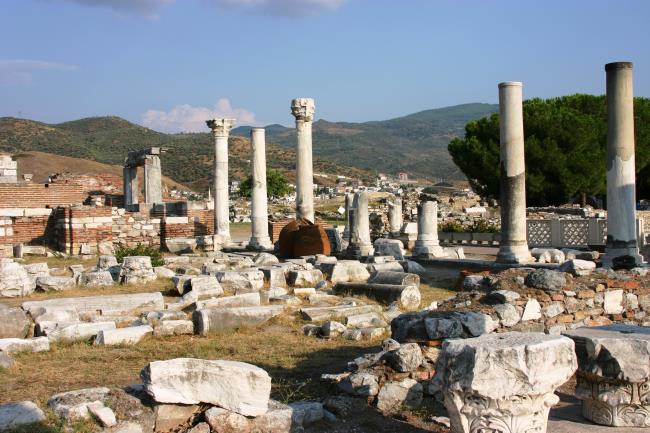
Paul’s Prayers in Ephesians
Two prayers from Ephesians 1 and 3, turned into a one-minute daily prayer for yourself or someone you love.
Keep reading →
A Prayer for Someone Else
How to send a prayer for a friend, a parent or a child, what to write, and why to ask before naming them.
Pray for them →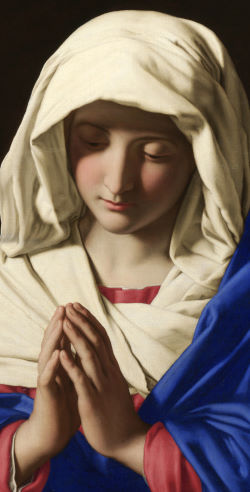
Prayers to the Virgin Mary
The Memorare, the Hail Mary, Sub Tuum Praesidium — for help, healing, protection and intercession.
Pray with us →Name one person. We will carry it.
Paul asked for prayer “for all the saints.” Send the first name of someone who needs the armor of God today, and we will place it on the wishing wall at the House of Virgin Mary near Ephesus, free of charge, in any language.
Send my prayer nowFree · No donations asked · Any language · Placed by our family in person