
How Was the House of Virgin Mary Discovered?
The House of Virgin Mary was found in July 1891, when two Lazarist priests from Izmir climbed Bülbül Mountain with Anne Catherine Emmerich’s visions in hand, looking for the stone house and spring she had described. They went up as skeptics and came down having found both. A French priest, Abbé Julien Gouyet, had first located the ruin in 1881.
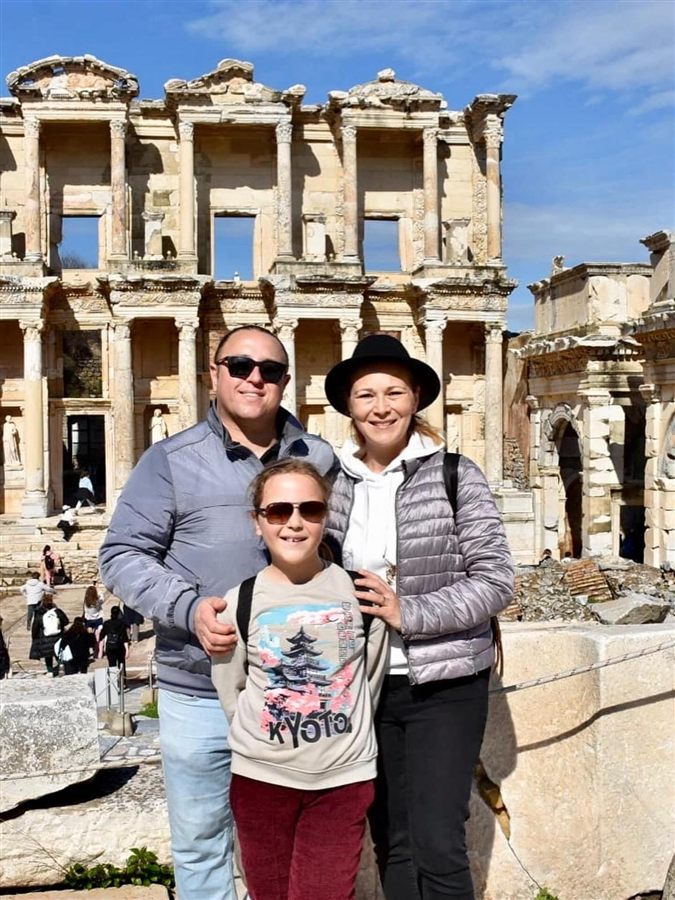
Written by Hasan Gülday · the Gülday family, Ephesus
How was the House of Virgin Mary discovered?
The House of Virgin Mary was found in July 1891, when two Lazarist priests from Izmir climbed Bülbül Mountain above Ephesus using the descriptions in Anne Catherine Emmerich’s visions as their guide — and found the ruined stone house exactly where the book placed it.
A book instead of a map
Most great discoveries begin with a map. The discovery of the House of Virgin Mary began with a book: The Life of the Blessed Virgin Mary, compiled from the visions of the German mystic Anne Catherine Emmerich, written down at her bedside by the poet Clemens Brentano. In its pages, a bedridden nun who had never traveled described the house where Mary lived out her final years — a small stone house on a mountain south-west of Ephesus, with a rounded apse, a hearth, and a spring of clear water close by.
The first discovery nobody believed
In 1881 a French priest, Abbé Julien Gouyet of Paris, took the book seriously enough to travel to Turkey and search. Following Emmerich’s descriptions, he found the ruins of a small stone building on Bülbül Mountain — and reported his discovery to church authorities in Paris and Rome.
Almost nobody listened. The idea that a sick nun in Germany could pinpoint a ruin in Anatolia seemed too fantastic, and his report was quietly filed away. The mountain kept its secret for ten more years.
The 1891 expedition — skeptics up the mountain
The story resumes in Izmir (ancient Smyrna), at the French hospital where Sister Marie de Mandat-Grancey, a Daughter of Charity, had read Emmerich’s book and could not let it go. She urged two Lazarist priests — Father Eugène Poulin and Father Henri Jung — to investigate. The two men were open skeptics; by their own account they set out mainly to put the legend to rest.
On 29 July 1891, after days of hard searching in the summer heat, the expedition came upon a spring high on Bülbül Mountain — and beside it, the ruins of a small stone building with a rounded apse and the traces of an ancient hearth. Detail after detail matched the book in their hands: the location above the sea, the layout of the walls, the distance from Ephesus, the mountain path. The skeptics were the first converts of their own discovery.

The mountain had never really forgotten
Then came perhaps the most beautiful part of the story. The priests learned that the ruin already had a name. The Orthodox Christian villagers of Şirince — a mountain village whose families traced their roots back to the Christians of ancient Ephesus — called the place Panaya Kapulu, “the Doorway to the All-Holy.” For generations, without any book, they had made a pilgrimage to the ruin every year on the 15th of August, the Feast of the Assumption — a tradition handed down from parents to children, from a time beyond memory.
What the archaeology says
Careful examination of the site brought its own quiet confirmation. The exposed walls of the house date largely to the 6th–7th centuries — but they stand on much older foundations, dated to the 1st century AD, the very lifetime of the Virgin Mary. Traces of ancient coals from the hearth area pointed to the same early period. The house had been destroyed and rebuilt over the centuries, but the footprint Emmerich described had been there from the beginning. Today the shrine stands within the UNESCO World Heritage area of Ephesus, whose listing itself notes the House of the Virgin Mary as a major place of Christian pilgrimage since the 5th century.
In 1892 Sister Marie de Mandat-Grancey purchased the mountain site to protect it, and the long, loving work of restoration began. Rome took notice as well — a story that leads through three papal visits to Mary’s house.
Sources & further reading
- Ephesus — UNESCO World Heritage List — official listing, includes the House of the Virgin Mary
- Ephesus — Ancient City, Turkey — Encyclopaedia Britannica
- House of the Virgin Mary — Wikipedia
- Sister Marie de Mandat-Grancey — Wikipedia
- The Life of the Blessed Virgin Mary — the book that guided the expedition — Internet Archive
Father Poulin, leader of the 1891 expedition, set out as a declared skeptic — he climbed the mountain hoping to disprove the visions, not to confirm them. The mountain had other plans.
“You will seek me and find me when you seek me with all your heart.”
Jeremiah 29:13
People often ask
Who discovered the House of Virgin Mary? ▾
French priest Abbé Julien Gouyet first located the ruin in 1881 using Anne Catherine Emmerich’s descriptions, but his report was ignored. On 29 July 1891 an expedition of Lazarist priests — Father Eugène Poulin and Father Henri Jung, urged on by Sister Marie de Mandat-Grancey — rediscovered the house and documented the match with the visions.
What does “Panaya Kapulu” mean? ▾
Roughly “the Doorway of the All-Holy (Virgin).” Panaya Kapulu is the local name the Orthodox Christian villagers of Şirince used for the ruin. Their annual pilgrimage to the site every 15th of August had preserved its memory for generations before the 1891 expedition arrived.
Is the House of Virgin Mary authentic? ▾
It cannot be proven, but the Church has favored it for over a century. The Catholic Church has never issued a dogmatic pronouncement on the house’s authenticity, but it has treated the shrine with striking favor: pilgrimages were blessed as early as the 1890s, Pope Pius XII elevated it to the status of a Holy Place in 1951 (later made permanent by John XXIII), and Popes Paul VI, John Paul II and Benedict XVI all prayed there. Archaeology dates the foundations to the 1st century AD.
Continue the story
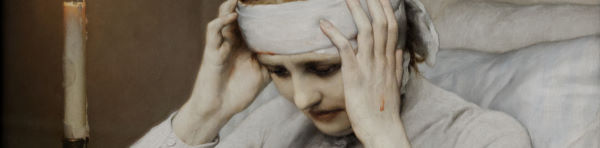
Anne Catherine Emmerich
The bedridden nun whose visions found Mary’s house — without her ever leaving Germany.
Keep reading →
Restoration of the House
From a roofless ruin to a living shrine that welcomes a million pilgrims every year.
Keep reading →
Popes at Mary’s House
Paul VI, John Paul II, Benedict XVI — a century of papal devotion to the little stone house.
Keep reading →The house was found so prayers could find it too
Send us your prayer or wish, and we will place it on the wishing wall beside the house that was lost and found again.
Send my prayer nowFree · No donations asked · Any language · Placed by our family in person