
The Stigmata: Wounds of Love
The stigmata are wounds like those of the crucified Christ, in the hands, feet or side, appearing on a living person’s body without natural explanation. In 1812, in a small room in Dülmen, they appeared on Anne Catherine Emmerich, a bedridden nun, who joined a small company of mystics across eight centuries, from Francis of Assisi to Padre Pio.
Written by Hasan Gülday · the Gülday family, Ephesus
What is stigmata?
The word comes straight from the Bible. Writing to the Galatians, Saint Paul says: “I bear on my body the stigmata — the marks — of Jesus.” In Christian tradition, stigmata are wounds corresponding to the wounds of the crucified Christ — in the hands, the feet, the side, or from the crown of thorns — appearing on the body of a living person without natural explanation.
The Church has long treated such reports with great caution, investigating them rigorously and reminding the faithful that holiness is proven by love, not by wounds. Yet across eight centuries, a small number of cases have withstood every examination — and they belong to some of the most beloved figures in Christian history.
The wounds of Anne Catherine Emmerich
For Anne Catherine Emmerich, it began quietly in 1812: first a cross-shaped mark over her breastbone, then wounds as if from a crown of thorns, and finally the wounds of the nails in her hands and feet. She had prayed all her life to share in the sufferings of Christ; she told no one, and hid the marks for as long as she could.
When the wounds became known in 1813, the Church ordered a strict investigation — and later the civil authorities conducted their own, posting watchers at her bedside day and night for weeks. No fraud was ever found. What the investigators did find was a woman in constant pain who complained of nothing, ate almost nothing, and spent her strength praying for other people.
Saints who bore the same marks
Saint Francis of Assisi — the first recorded stigmatist in history. In September 1224, praying on Mount La Verna in Italy, Francis received the wounds of the crucifixion two years before his death. His companions saw them; his biographers recorded them; and eight centuries of devotion have followed.
Saint Catherine of Siena — the great mystic of the 14th century received the stigmata in 1375 in Pisa. At her own plea, the wounds remained invisible to others during her lifetime — a hiddenness that suited a woman whose entire life was offered for peace in the Church.
Saint Padre Pio of Pietrelcina — the most famous stigmatist of the modern era. The wounds appeared on the Italian Capuchin friar in September 1918 and remained, examined by doctors again and again, for fifty years — healing without scars shortly before his death in 1968. Millions of pilgrims sought his confessional; John Paul II canonized him in 2002.
Saint Gemma Galgani — a young laywoman of Lucca, Italy, who reported the wounds appearing weekly from 1899, on the days recalling Christ’s Passion. She died at 25 and was canonized in 1940.
Therese Neumann — a Bavarian farmer’s daughter of the 20th century, whose reported stigmata and decades of survival on almost no food drew worldwide attention. Her cause for beatification was opened in 2005; the Church’s careful examination continues — caution, as ever, walking beside wonder.

A mystery of compassion
What are the stigmata for? The mystics themselves gave the same answer in different words: they are not a badge of honor but a share in compassion — love pressed so deep that it leaves a mark. Every one of these figures spent their wounded years doing the same thing: praying for others.
That, in the end, is why this story belongs on our website. Our initiative exists so that anyone, anywhere, can have their prayer placed at the House of Virgin Mary — the house found through the visions of a woman who bore these very wounds. When we lay your intentions on the wishing wall, we are continuing the oldest tradition of the mystics: carrying other people’s burdens to God.
Sources & further reading
- Stigmata — Definition, History & Famous Stigmatics — Encyclopaedia Britannica
- Saint Francis of Assisi — the vision and the stigmata — Encyclopaedia Britannica
- Saint Padre Pio of Pietrelcina — Encyclopaedia Britannica
- Canonization homily of St. Pio of Pietrelcina — Vatican.va, 16 June 2002
- Anna Katharina Emmerick — beatification biography — Vatican.va
Saint Padre Pio bore the stigmata for fifty years — and the wounds healed without leaving a single scar, shortly before his death in 1968. Doctors who examined him could never explain either fact.
“From now on, let no one cause me trouble, for I bear on my body the marks of Jesus.”
Galatians 6:17
Continue the story
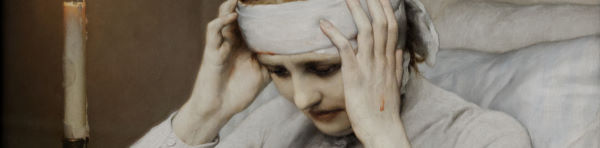
Anne Catherine Emmerich
The bedridden nun whose visions found Mary’s house — without her ever leaving Germany.
Keep reading →
Clemens Brentano
One of Germany’s greatest poets spent five years at a sickbed, writing down the visions.
Keep reading →
Popes at Mary’s House
Paul VI, John Paul II, Benedict XVI — a century of papal devotion to the little stone house.
Keep reading →You don’t need wounds to share a burden
Whatever you carry, write it down. We will place your prayer on the wishing wall at the House of Virgin Mary — with reverence, and completely free.
Send my prayer nowFree · No donations asked · Any language · Placed by our family in person