
Anne Catherine Emmerich
Anne Catherine Emmerich (1774–1824) was a bedridden German nun whose visions, written down by the poet Clemens Brentano, described the House of Virgin Mary near Ephesus in precise detail. She never left Westphalia, yet in 1891, 67 years after her death, two priests followed her words up Bülbül Mountain and found the ruin. John Paul II beatified her in 2004.
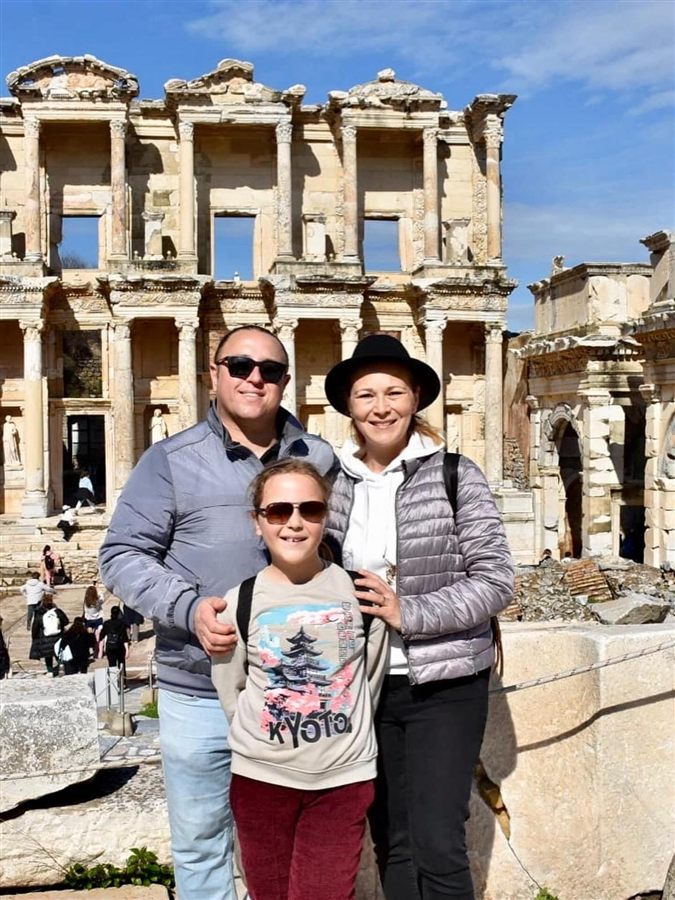
Written by Hasan Gülday · the Gülday family, Ephesus
A childhood of poverty and prayer
Anne Catherine Emmerich was born on 8 September 1774 in Flamschen, a small farming community near Coesfeld in Westphalia, Germany. Her family was poor — nine children in a cramped farmhouse — and Anne Catherine received almost no schooling. She worked from childhood: first on the farm, then as a seamstress.
What set her apart showed itself early. From her youngest years she experienced vivid visions of the life of Jesus and the Virgin Mary — so naturally that for a long time she assumed every child saw the same things. Neighbors noticed something else about her too: a wisdom and a kindness far beyond her years, and an almost instinctive urge to care for the sick and the poor.
The convent years
Anne Catherine longed for religious life, but poverty stood in the way — convents expected a dowry she simply did not have. She was finally accepted by the Augustinian convent of Agnetenberg in Dülmen in 1802, largely because a friend of hers, an organist’s daughter, refused to enter without her.
Her health, fragile all her life, declined steadily in the convent. Then history intervened: in 1812, during the upheavals of the Napoleonic era, the convent was closed and the nuns were turned out. Anne Catherine, too ill to work, found refuge in the house of a widow in Dülmen. She would spend the rest of her life there — most of it confined to bed.
The visions
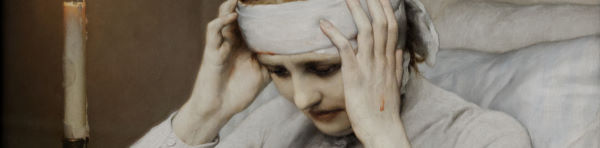
It was in that small sickroom that the visions of Anne Catherine Emmerich became famous. Bedridden and in constant pain, she described scenes from the life of Christ and the life of the Blessed Virgin Mary in staggering detail — places, buildings, distances, customs, even plants and weather, as though she were walking through the Holy Land herself.
Among these visions was one that concerns our little corner of the world. She described, precisely, the house where the Virgin Mary spent her final years: a rectangular stone house with a rounded back wall and a hearth, on a mountain above ancient Ephesus, looking toward the sea, with a spring of fresh water nearby. She even described the path Mary walked and the community of Christians who settled around her.
In 1818 the celebrated German poet Clemens Brentano came to her bedside, intending to stay two weeks. He stayed nearly six years, filling notebook after notebook with what she told him; the Marian visions became The Life of the Blessed Virgin Mary, published in 1852. Without those notebooks, her visions — and perhaps the house itself — might have been lost to the world.
There is one more extraordinary chapter of her story: in 1812 the wounds of Christ, the stigmata, appeared on her body. Church and civil authorities investigated her for months and found no deception — only a patient, suffering woman who offered everything up in prayer.
Her legacy
Anne Catherine Emmerich died in Dülmen on 9 February 1824, worn out at the age of 49. Her last recorded words were as simple as her life: she asked for prayers. On 3 October 2004, Pope John Paul II — who had himself prayed at the House of Virgin Mary in 1979 — declared her Blessed; her life is honored today in the Encyclopaedia Britannica and far beyond it.
Today, every pilgrim who lights a candle at Meryem Ana Evi, and every prayer we place on the wishing wall, owes something to a bedridden nun who saw further from her pillow than most of us see in a lifetime of travel.
Sources & further reading
- Anna Katharina Emmerick — official beatification biography — Vatican.va, 3 October 2004
- Blessed Anna Katharina Emmerick — Encyclopaedia Britannica
- The Life of the Blessed Virgin Mary — from the visions of Anne Catherine Emmerich — full book, Internet Archive
- The Life of the Blessed Virgin Mary — online text — Christian Classics Ethereal Library
Anne Catherine Emmerich received almost no formal schooling — yet the visions she dictated from her sickbed fill tens of thousands of manuscript pages in Clemens Brentano’s notebooks.
“Blessed are the pure in heart, for they will see God.”
Matthew 5:8
People often ask
Who was Anne Catherine Emmerich? ▾
Anne Catherine Emmerich (1774–1824) was a German Augustinian nun, mystic and visionary from Dülmen, Westphalia. Bedridden for much of her adult life, she described detailed visions of the lives of Jesus and the Virgin Mary — including the house near Ephesus where Mary spent her final years.
Did Anne Catherine Emmerich ever visit Ephesus? ▾
No — and that is what makes her story so remarkable. She never left her home region of Westphalia in Germany, yet her description of the House of Virgin Mary matched the ruin discovered near Ephesus in 1891 in location, layout and surroundings.
When was Anne Catherine Emmerich beatified? ▾
She was beatified by Pope John Paul II on 3 October 2004. Her feast day is celebrated on 9 February, the day of her death.
What exactly did she say about the House of Virgin Mary? ▾
She described a small rectangular stone house with a rounded apse and a hearth, built by Saint John on a mountain south-west of Ephesus, overlooking the sea, with a spring nearby — details that guided the 1891 expedition that found the house.
Continue the story

The Discovery of the House
How two skeptical priests followed a book up a mountain in 1891 — and found the ruin it described.
Keep reading →
Clemens Brentano
One of Germany’s greatest poets spent five years at a sickbed, writing down the visions.
Keep reading →
The Stigmata
The wounds of Christ on a nun’s body — and other saints who bore the same mysterious marks.
Keep reading →Her visions found the house. Your prayer can rest there.
Send us your prayer and we will place it on the wishing wall in the garden of the very house Anne Catherine Emmerich described.
Send my prayer nowFree · No donations asked · Any language · Placed by our family in person