
A Prayer for a Loved One Who Passed Away
You can pray for a loved one who passed away, and Christians have done it for at least 1,800 years: around AD 200 Tertullian wrote that the church made offerings for the dead on each anniversary. The shortest prayer is the Eternal Rest, which takes about ten seconds to say. Below it is a personal prayer to adapt, and the Ephesus story people told about waking from death.
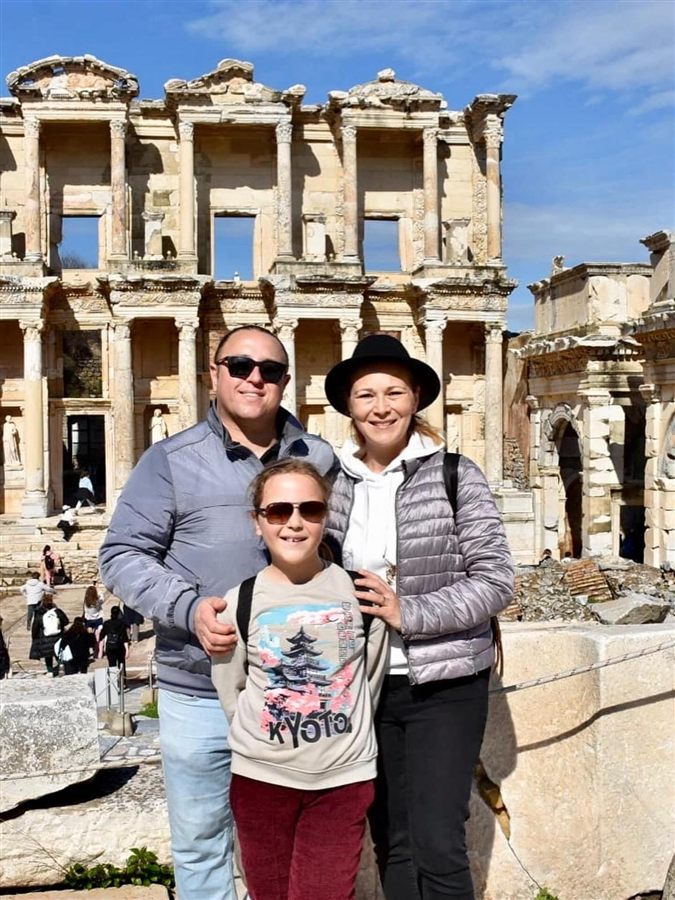
Written by Hasan Gülday · the Gülday family, Ephesus
Can you pray for someone who has died?
Yes. Catholic and Orthodox Christians, and many Anglicans and Lutherans, pray for the dead by name, asking God to give them rest and mercy. Many other Protestants entrust the person to God, give thanks for their life and pray for the family. Both are prayers, and both are welcome here.
The habit is very old. In the second book of Maccabees, Judas Maccabeus collects money for an offering for soldiers who had fallen in battle, and the writer says he did it “taking account of the resurrection” (2 Maccabees 12:43–45). Catholic and Orthodox Bibles include that book; most Protestant Bibles do not, which is part of why the traditions differ. The Catechism of the Catholic Church (§1032) cites it when it speaks of prayer for the dead.
Ephesus has its own small example. In his last letter, Paul thanks God for a man called Onesiphorus, who “was not ashamed of my chain” and served him well “at Ephesus.” Then he prays for him: “the Lord grant to him to find the Lord’s mercy in that day” (2 Timothy 1:16–18). He greets only “the house of Onesiphorus,” not the man himself, and many readers have concluded that Onesiphorus had already died. Scholars still debate it. Either way, it is a prayer for mercy on the last day for a friend from Ephesus who is no longer there.
The Eternal Rest: a short prayer for someone who passed away
If you only have a moment, at a graveside, a bedside or in the car outside the funeral home, this is a prayer many Catholics learn as children. It is short enough to say from memory and works for one person or many.
Eternal rest grant unto them, O Lord, and let perpetual light shine upon them. May they rest in peace. Amen. May their souls, and the souls of all the faithful departed, through the mercy of God, rest in peace. Amen.
The Eternal Rest (Requiem aeternam) · traditionalFor one person, say “him” or “her” instead of “them,” or say the name: “Eternal rest grant unto Maria, O Lord.” The Hail Mary also ends with the dead in mind, asking Mary to pray for us “now and at the hour of our death.” You will find it with the Memorare and four other prayers on our page of prayers to the Virgin Mary.
A prayer for a loved one who passed away
This prayer is for the days and months after a death, when a set prayer feels too short. It takes about a minute. Put the name where it says N., and change any line that does not sound like the two of you.
Lord Jesus, you wept at the grave of your friend Lazarus, so you know what this loss feels like. I give you N., whom I loved and still love. Thank you for the years you gave us, for the meals, the arguments and the ordinary days. Forgive what was left unsaid or undone between us. Give N. rest, and let your light shine on them. Keep them in your mercy until the day you raise the dead. And stay with those of us who miss them: on the anniversaries, at the empty chair, on the evenings when the house is too quiet. You are the resurrection and the life. I leave N. with you, in hope. Amen.
Based on John 11:25–35 and 2 Timothy 1:18If the death was recent and the words will not come, it is enough to say the name and “Lord, have mercy.” If the relationship was hard, or there was no goodbye, say that too. A prayer for the dead is also a place to put what you did not get to tell them.
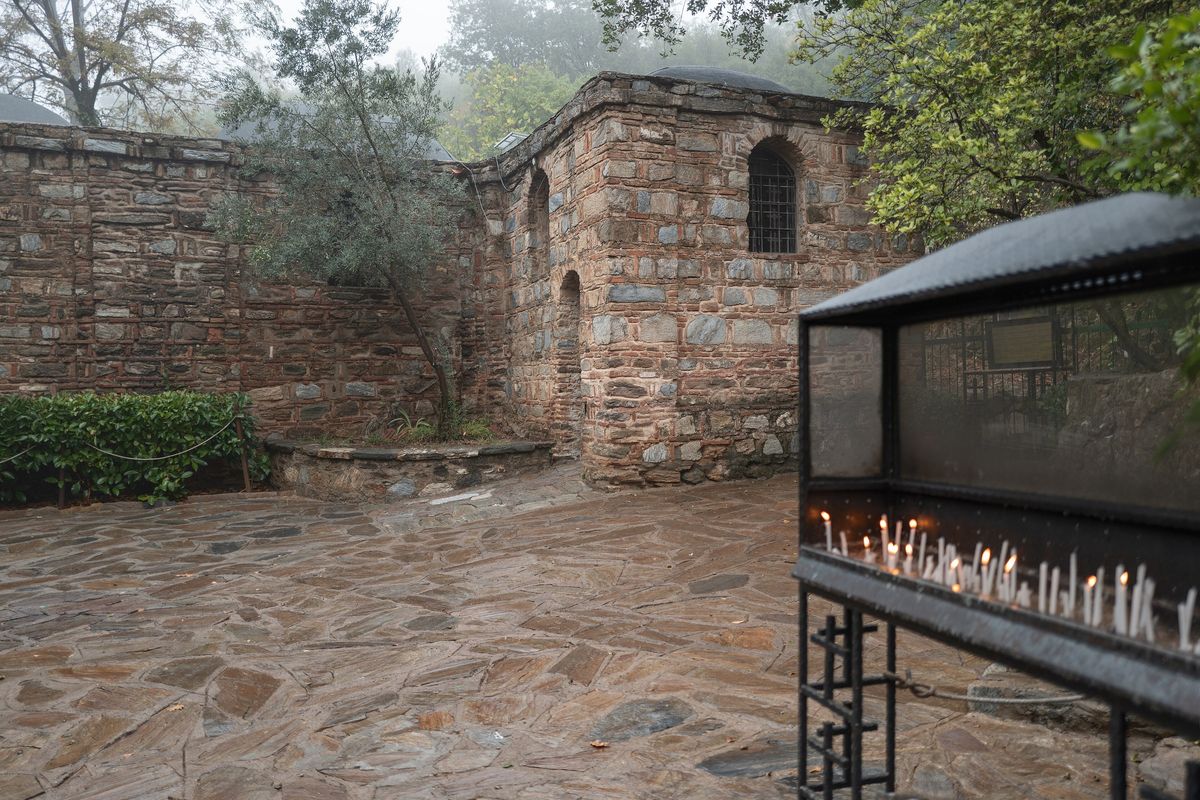
For the first days, and for the anniversary
Christians have marked the date of a death for a very long time. Around AD 200, the North African writer Tertullian listed the customs every church kept, and among them: “As often as the anniversary comes round, we make offerings for the dead” (Tertullian, De Corona 3). Today Catholics often have a Mass said on the anniversary, and Orthodox Christians hold memorial services on the third, ninth and fortieth days and then each year.
- A loved one who just passed away. Keep it short and repeat it: “Lord, receive N. into your peace, and hold us up this week.” Pray for the people making the arrangements too.
- A death anniversary. Light a candle, say the name aloud and give thanks for one thing they did. Then pray the Eternal Rest, or the longer prayer above.
- A parent. “For my father, Daniel: rest, and thanks for every early morning he drove me to work.” Specific memories make the prayer yours.
- Someone you never got to say goodbye to. Say the goodbye in the prayer. “I am sorry I was not there. Go in peace.”
The Seven Sleepers of Ephesus, a story about waking
On the slope of Panayırdağ, the hill on the eastern edge of ancient Ephesus, is a grotto that Christians connected for more than a thousand years with the Seven Sleepers. The story says that during the persecution under the emperor Decius, around AD 250, seven young Christians of Ephesus hid in a cave, fell asleep and were walled in. They woke under the emperor Theodosius II, roughly two centuries later, and walked into a Christian city that no longer knew them.
The point of the story was the resurrection. As Britannica puts it, the legend was popular for centuries because it “affirmed the resurrection of the dead.” In the medieval versions the sleepers wake at a time when some in the church were denying that the dead would rise, and their waking answers the question. The Quran tells a related story of the companions of the cave in its eighteenth chapter, so Muslims know it too.
Is the story true? Historians read it as a legend: the versions do not even agree on how long the sleep lasted, from about 200 years to 373 in one sixth-century telling from Gaul. But the hope it carries is the same hope behind every prayer for the dead. Death is called sleep from the first Christian letters onward. Paul, writing to the church in Thessalonica, did not want them “to be ignorant concerning those who have fallen asleep” (1 Thessalonians 4:13–14), and sleepers wake.
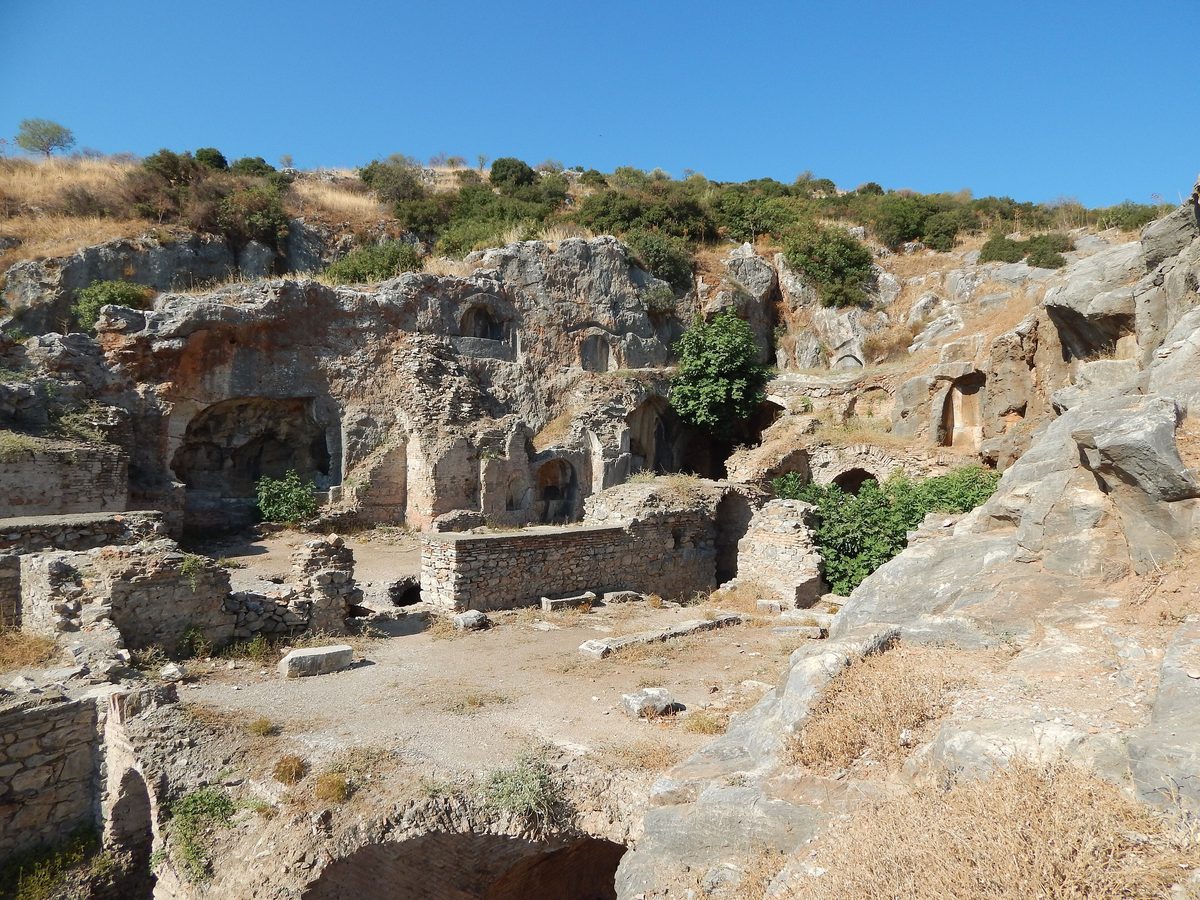
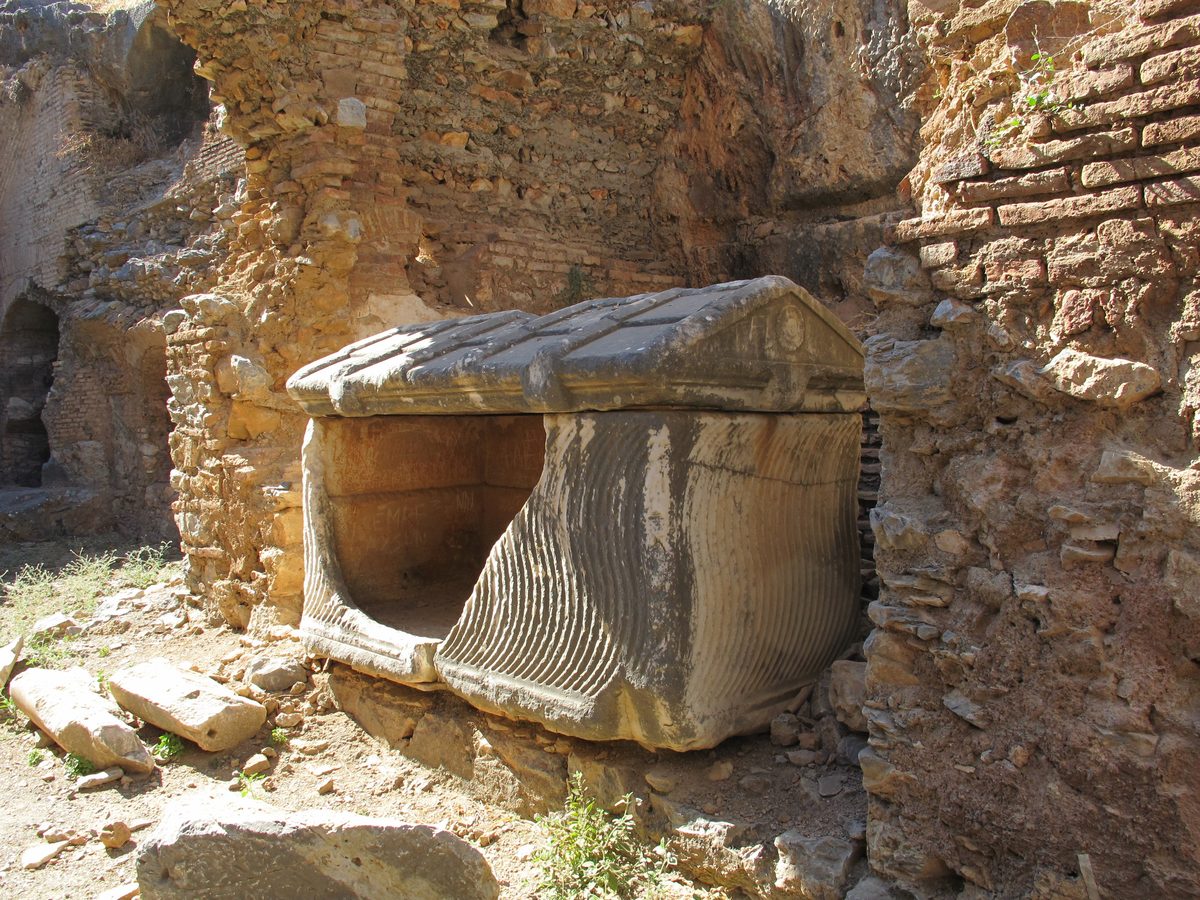
The graves crowded around the grotto
What is certain is what people did with the story. Austrian archaeologists who excavated the site in 1926–1928 found a church built over the grotto and several hundred graves of the fifth and sixth centuries, many with inscriptions that call on the Seven Sleepers. Painting in the crypt has been dated to the late fourth century, and inscriptions show that people were still being buried there in the fifteenth. No excavation can show that any of it belonged to the legend’s seven young men; what it shows is a thousand years of families asking to lie beside a story about waking.
Think of the people who chose those graves. They were not famous. They were parents and children of Ephesus, and the families who buried them were praying the same prayer you may be praying now: that this sleep is not the end. Eastern churches still remember the Seven Sleepers on 4 August and again on 22 October.
November and All Souls’ Day
Many churches give the whole month of November to the dead. All Saints’ Day is 1 November, and All Souls’ Day, the day of prayer for all the faithful departed, is 2 November, which in 2026 falls on a Monday. The custom of one yearly day for all the dead spread from the monasteries of Cluny, where Abbot Odilo, who died in 1048, ordered it to be kept after All Saints (Catholic Encyclopedia, All Souls’ Day). Many parishes keep a book of names through November and pray for everyone written in it.
You can do the same at home. Write the names of the people you have lost on a single sheet, keep it by a candle for the month, and pray the Eternal Rest over the list each evening.
Dates last reviewed October 2026. Sources: the Catholic liturgical calendar for All Souls’ Day; Eastern Orthodox calendars for the Seven Sleepers.
Send a memorial prayer with your loved one’s first name
One of the examples on our page about how to send a prayer request is a memorial prayer: “For my grandfather, who passed last spring. Rest well.” That is all a memorial prayer needs to be. Begin with “In memory of” or “For,” add their first name and one line of what you hope for them, or for the people who miss them.
In memory of my mother, Helen, who died in June. Give her rest and light, and help my father through his first winter alone.
A memorial prayer · 124 charactersFor my grandfather, who passed last spring. Rest well. Thank you for teaching me to fish and to pray.
A memorial prayer · 101 charactersOur family places each prayer we receive on the wishing wall below the House of Virgin Mary on our next regular visit, a short drive from the Seven Sleepers grotto. We do not promise a date, only that it is placed with care, among thousands of notes from people who have lost someone too. If the prayer is for a friend’s loss rather than your own, our page on sending a prayer for someone else has a short privacy note.
Sources & further reading
- 2 Timothy 1:16–18: Paul’s prayer for Onesiphorus, who served “at Ephesus” — Bible Gateway, World English Bible
- 1 Thessalonians 4:13–14: “those who have fallen asleep” — Bible Gateway, World English Bible
- Catechism of the Catholic Church §1030–1032: purification and prayer for the dead — Vatican.va
- Tertullian, De Corona 3: offerings for the dead on the anniversary — New Advent, Ante-Nicene Fathers translation
- All Souls’ Day: origins and Odilo of Cluny — Catholic Encyclopedia (1907), New Advent
- Seven Sleepers of Ephesus — Encyclopaedia Britannica
The Seven Sleepers site at Ephesus was used as a Christian burial ground for about a thousand years: from the fifth century to at least the fifteenth, families chose graves beside a story about the dead waking.
“I am the resurrection and the life. He who believes in me will still live, even if he dies.”
John 11:25
People often ask
What is a short prayer for someone who passed away? ▾
The Eternal Rest: “Eternal rest grant unto them, O Lord, and let perpetual light shine upon them. May they rest in peace. Amen.” It takes about ten seconds. Put in their name or “him” or “her” for one person. Many people add: “Lord, comfort those who miss them.”
How do you pray for someone who has passed away? ▾
Say their name, give thanks for their life, ask God for their rest and mercy, and pray for the people who miss them. That four-step pattern fits a graveside, a candle at home or a Mass intention. Catholic and Orthodox Christians ask for rest and mercy; many Protestants pray mainly in thanksgiving and for the family.
Is there a Catholic prayer for a loved one who passed away? ▾
Yes. The Eternal Rest (Requiem aeternam) is the standard Catholic prayer for the dead, and many families also have a Mass said for the person, especially on the anniversary and on All Souls’ Day, 2 November. The Catechism (§1032) describes prayer for the dead as an ancient practice of the Church.
What prayer can I say on a loved one’s death anniversary? ▾
Light a candle, say their name aloud, give thanks for one thing they did and pray the Eternal Rest. Christians have marked the date for a long time: around AD 200 Tertullian wrote that the church made offerings for the dead “as often as the anniversary comes round.”
Is the Seven Sleepers story true? ▾
Historians treat it as a legend: the versions do not agree on how long the sleep lasted, from about 200 to 373 years. The place is real, though. Excavations in 1926–1928 found a church over the grotto at Ephesus and several hundred graves of the fifth and sixth centuries with inscriptions to the Seven Sleepers.
Do Protestants pray for the dead? ▾
Some do and many do not. Anglicans and Lutherans often include the departed in prayer; many evangelical churches do not, because they believe the dead are already in God’s hands. What almost every Christian tradition shares is prayer that gives thanks for the person and asks comfort for the family.
Will my loved one’s full name be visible on the wishing wall? ▾
Only what you write is placed on the wall, and the wall is in a garden open to every visitor, so use a first name, or “my grandfather.” We do not publish prayers with full names, and your e-mail is used only to receive your prayer.
Continue the story

A Prayer for Someone Else
How to send a prayer for a friend, a parent or a child, what to write, and why to ask before naming them.
Pray for them →
Prayers to the Virgin Mary
The Memorare, the Hail Mary, Sub Tuum Praesidium — for help, healing, protection and intercession.
Pray with us →
The Wishing Wall
Thousands of folded prayers on one wall — the tradition your prayer becomes part of.
Discover the tradition →Say their name. We will carry it.
Send a memorial prayer with your loved one’s first name. We will place it on the wishing wall at the House of Virgin Mary near Ephesus, free of charge, in any language.
Send my prayer nowFree · No donations asked · Any language · Placed by our family in person