
The Life of the Blessed Virgin Mary: A Reader’s Guide
The Life of the Blessed Virgin Mary is the book of Anne Catherine Emmerich’s visions, written down by the poet Clemens Brentano and published in Munich in 1852, ten years after his death. A few paragraphs in it place Mary’s last home on a hill three and a half hours from Ephesus, and in 1891 two priests followed them to the ruin now called Meryem Ana Evi.
Written by Hasan Gülday · the Gülday family, Ephesus
What is The Life of the Blessed Virgin Mary by Anne Catherine Emmerich?
The Life of the Blessed Virgin Mary is a book of visions attributed to Anne Catherine Emmerich (1774–1824), a bedridden German nun. The poet Clemens Brentano wrote them down, and the book appeared in Munich in 1852. It follows Mary from her ancestors to her death and Assumption near Ephesus.
Brentano sat at Emmerich’s bedside in Dülmen, Westphalia, from 1818 until she died in 1824. The preface to the German edition says his diary of her visions began in January 1820, and that in 1821 and 1822 they turned more and more to the life of Christ and the people around him. From those notebooks came two books. The Dolorous Passion of Our Lord Jesus Christ appeared in 1833. The smaller life of Mary he arranged himself, choosing woodcuts to illustrate it, and it was about half printed when he died on 28 July 1842. A proof sheet with his own corrections survives in Frankfurt, at the Freies Deutsches Hochstift.
His brother Christian took over the papers but died in October 1851 with the work unfinished. Christian’s widow, Emilie, completed it with the help of scholarly friends, and Leben der heil. Jungfrau Maria came out in Munich in 1852. Most English readers know it in Sir Michael Palairet’s translation of 1954, with notes by the Dominican scholar Sebastian Bullough, which is still in print. For the man who held the pen, see our page on Clemens Brentano.
What the book covers, chapter by chapter
The English edition has 16 chapters. Most of the book is Mary’s early life and the Christmas story; the last two chapters jump to her final years near Ephesus.
- Chapters I–V: Mary’s ancestors, her birth to Joachim and Anne, her presentation in the Temple, the early life of Saint Joseph, and the promise of a son to Zechariah.
- Chapters VI–X: the marriage to Joseph, the Annunciation, the Visitation, Advent and the birth of Jesus.
- Chapters XI–XIV: the Three Kings, the Purification, the flight into Egypt and the return, when Jesus was nearly eight.
- Chapters XV–XVI: Mary’s death near Ephesus, her burial and the Assumption.
Two things surprise first-time readers. The long gap is deliberate: Jesus’ public life is missing because Brentano kept that material for his separate life of Christ, and the preface says the two should be read together. And the opening chapters tell stories the Gospels never tell. The names Joachim and Anne and the scene of the little girl brought to the Temple come from the Protoevangelium of James, a text of the second century; the book retells those episodes in far more detail.
What the book says about Mary’s house near Ephesus
The Ephesus pages are short, and they are the reason the book matters on a mountain in Turkey. The book says they were dictated in different years, mostly in mid-August, in the days before the Feast of the Assumption. In the text, Mary spends three years on Mount Zion after the Ascension, three in Bethany and nine near Ephesus, where John brings her to a house he has already had built for her. These are the details that later guided the search:
- Where: not in the city, but in the country near it, on a hill to the left of the road from Jerusalem, about three and a half hours from Ephesus.
- The neighbors: a scattered settlement of Christian families living in caves and huts. “Mary’s house was the only one built of stone.”
- The view: from the rocky summit a little behind the house you could see over the trees and hills to Ephesus and to the sea with its many islands.
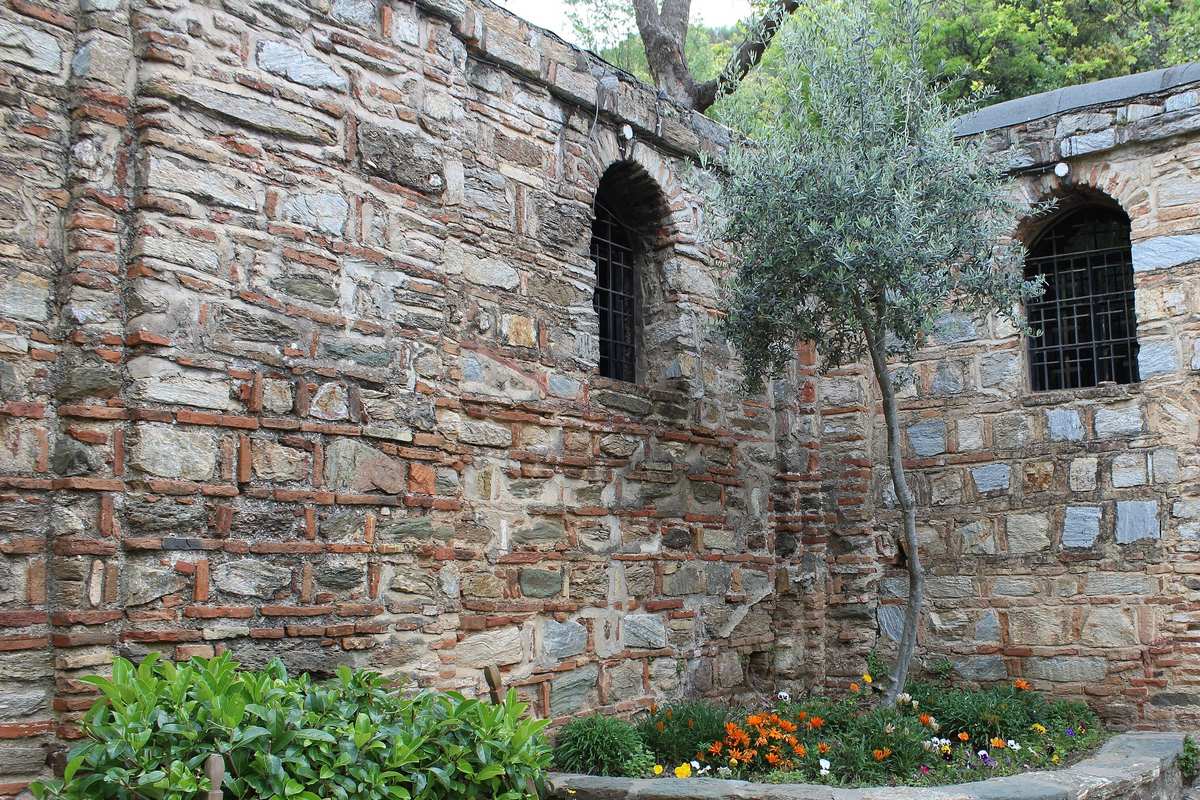
- The building: rectangular stones, rounded or pointed at the back, windows high under a flat roof, a hearth in the middle, and a back room ending in a semicircle, where Mary kept a small oratory with a cross and slept in an alcove beside it.
- Around it: a Way of the Cross that Mary marked with stones on the hill behind the house and, in the burial chapter, a rock tomb with water from a nearby spring led across its entrance.
The English editors were honest about the weak spots. Bullough’s notes point out that none of the old legends of the Assumption puts Mary at Ephesus (most say Jerusalem), and that the geography is muddled in places: the text supposes Ephesus lay several hours from the coast. The spring pilgrims drink from today has its own page: the holy water of the House of Virgin Mary.
Finding Mary’s house with the book in hand
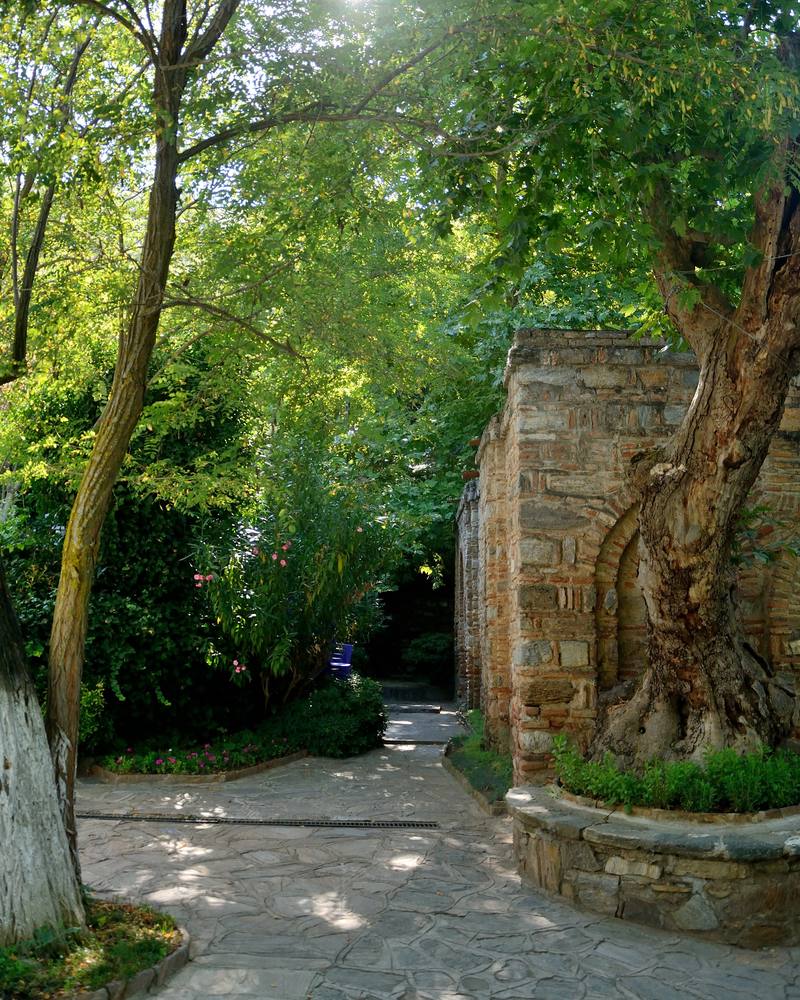
For almost thirty years the book was read as devotion. Then people started to test it. On 18 October 1881 a French priest, Abbé Julien Gouyet, found a ruin on Bülbül Mountain that fitted the description, and hardly anyone listened. On 29 July 1891 two Lazarist priests from Izmir, Father Eugène Poulin and Father Henri Jung, urged on by Sister Marie de Mandat-Grancey, reached the same ruin with a spring close by. The Orthodox villagers of Şirince already called the place Panaya Kapulu and walked up to it every 15 August.
The full story is on our page about the discovery of the House of Virgin Mary, and how the roofless ruin was restored into a chapel is told in From Ruin to Living Shrine. Whether Mary really lived there is a separate question, one the Church has never ruled on. We look at the evidence on Did the Virgin Mary live in Ephesus?
How reliable is Brentano’s transcription?
Nobody can say for sure how much of the book is Emmerich’s own. She could barely read or write, so there is no manuscript in her hand. Brentano was a Romantic poet who polished what he heard, read about the Holy Land on his own, and kept working on the text for years after her death.
In 1923 an Augustinian friar, Winfried Hümpfner, compared Brentano’s surviving notes with the printed books and showed how far the poet had expanded and rewritten them. His study contributed to the suspension of her beatification cause in 1928; it was reopened in 1973, as her Wikipedia biography summarizes.
What the 2004 beatification said about the book
Pope John Paul II, who had prayed at the House of Virgin Mary in 1979, beatified Anne Catherine Emmerich on 3 October 2004. The cause examined her life and virtues. It did not judge the books. Father Peter Gumpel, the Jesuit who studied the question for the cause, told Catholic News Service that it was impossible to separate what came from her and what Brentano added, so the writings were set aside (the 2004 reports are collected by Boston College).
Setting a book aside is not the same as condemning it, and many Catholics still read the Life of Mary for devotion. The Catechism puts writings like this in their place: private revelations, it says, are not part of the deposit of faith; their role is to help people live the Gospel more fully in their own time (§67).
Where to read The Life of the Blessed Virgin Mary free
- Online: the Christian Classics Ethereal Library has Palairet’s translation, with Bullough’s notes, to read in the browser or download.
- Borrow: the Internet Archive lends a scanned 1954 printing of the same translation to anyone with a free account.
- In German: an 1890 Stuttgart printing of Leben der heiligen Jungfrau Maria is a free download at the Internet Archive.
- In print: TAN Books keeps the Palairet translation in print.
How to read it: start at the end. Chapters XV and XVI, on Mary’s last years, death and Assumption, run to about twenty pages and are the part that touches Ephesus. Keep a Bible open beside it; the English edition gives the Gospel reference at the head of each chapter, so you can read the Gospel first and the vision second. And read slowly, a few pages at a time, as a meditation rather than a history book.
From the last chapter to the wishing wall
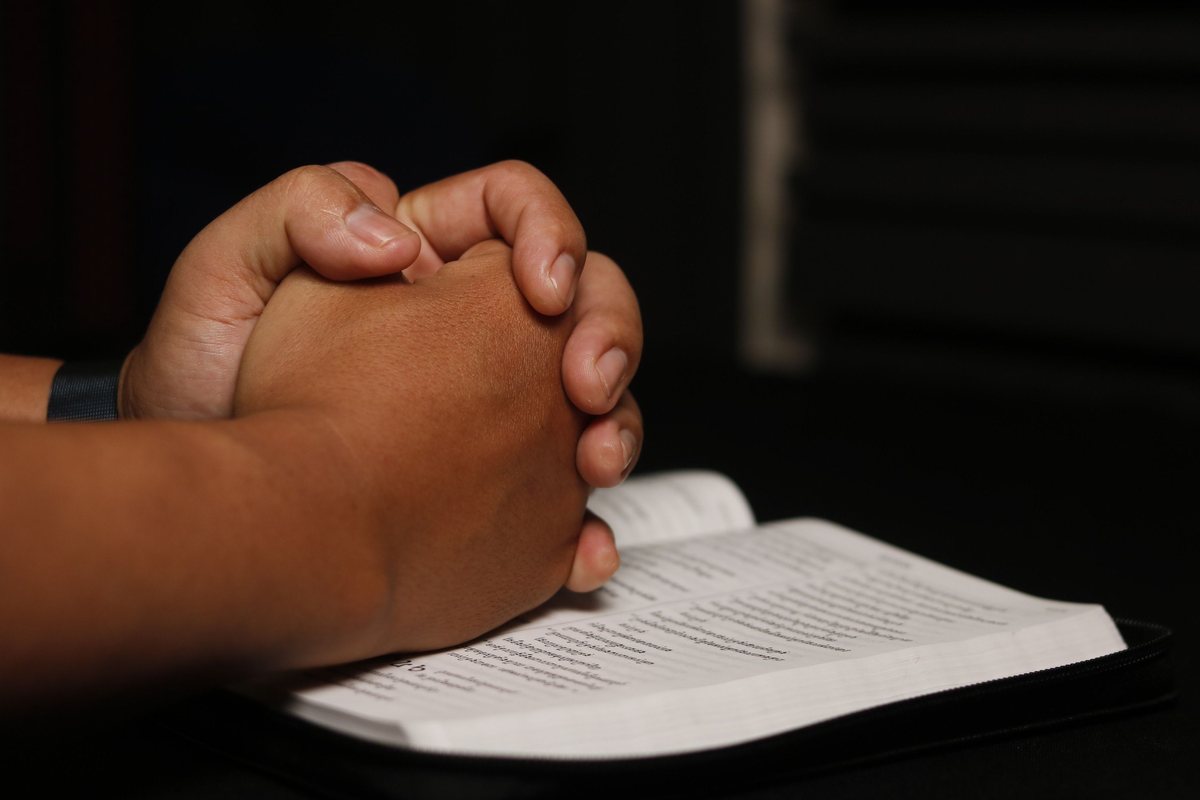
The book ends with Mary’s burial and Assumption. This website begins there, at the house its last chapters describe, where pilgrims of every faith still come to pray. Below the house, thousands of folded notes on the wishing wall carry prayers from people who could not make the journey themselves. If this book has drawn you closer to Mary, send us your prayer. Our family carries it up the mountain and places it on the wall, free of charge and in any language.
Sources & further reading
- The Life of the Blessed Virgin Mary, full text (Palairet translation, Bullough notes) — Christian Classics Ethereal Library
- The Life of the Blessed Virgin Mary, 1954 printing — Internet Archive, borrow with a free account
- Leben der heiligen Jungfrau Maria (German, 1890 printing) — Internet Archive, free download
- Leben der heil. Jungfrau Maria: Brentano’s corrected proof sheet, 1840 — Freies Deutsches Hochstift, Frankfurt (German)
- The Beatification of Anne Katherine Emmerich: 2004 news reports — Boston College, Center for Christian-Jewish Learning
- Anna Katharina Emmerick: official beatification biography — Vatican.va, 3 October 2004
- Catechism of the Catholic Church §65–67: private revelation — Vatican.va
- The Gospel (Protoevangelium) of James — Wikipedia
In the book, Emmerich gives Mary’s age at her death as 64 years less 23 days. She said she was shown the number only in Roman numerals: X six times, then I, then V.
“From that hour, the disciple took her to his own home.”
John 19:27
People often ask
Is The Life of the Blessed Virgin Mary approved by the Catholic Church? ▾
Not the book itself. Anne Catherine Emmerich herself is honored: Pope John Paul II beatified her on 3 October 2004. The books are another matter. Because nobody can separate her words from Clemens Brentano’s, the Vatican set them aside and based the beatification on her life alone. The Catechism (§67) is clear that private revelations like this are not part of the deposit of faith.
Where can I read The Life of the Blessed Virgin Mary for free? ▾
The Christian Classics Ethereal Library has Sir Michael Palairet’s English translation online, free to read or download. The Internet Archive lends a scanned 1954 printing to anyone with a free account, and it has an 1890 German edition, Leben der heiligen Jungfrau Maria, as a free download.
What happened to the Virgin Mary after Jesus died, according to Emmerich? ▾
In the book, Mary lives three years on Mount Zion in Jerusalem, three in Bethany and nine near Ephesus, in a stone house the apostle John had built for her. She travels to Jerusalem twice more, dies near Ephesus shortly before her 64th birthday, is laid in a rock tomb and is taken up into heaven. None of this detail is in the Bible; it is the vision as Brentano recorded it.
Who wrote The Life of the Blessed Virgin Mary, Emmerich or Brentano? ▾
Both, in a sense. The visions are Emmerich’s, told aloud from her sickbed in Dülmen in the years before her death in 1824. The words on the page are Brentano’s, and he shaped them heavily: in 1923 the Augustinian scholar Winfried Hümpfner compared his notes with the printed books and showed how much the poet had added.
How did the book help find Mary’s house? ▾
Its Ephesus chapter puts Mary’s stone house on a hill about three and a half hours from Ephesus, with the sea in view. Following it, Abbé Julien Gouyet found a matching ruin on Bülbül Mountain in 1881, and Lazarist priests from Izmir reached it again on 29 July 1891. The walls standing today are largely Byzantine, built on older foundations.
Continue the story
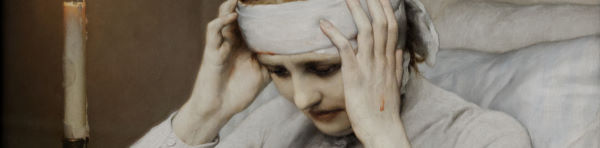
Anne Catherine Emmerich
The bedridden nun whose visions found Mary’s house — without her ever leaving Germany.
Keep reading →
Clemens Brentano
One of Germany’s greatest poets spent five years at a sickbed, writing down the visions.
Keep reading →
The Discovery of the House
How two skeptical priests followed a book up a mountain in 1891 — and found the ruin it described.
Keep reading →The book ends at her house. Your prayer can go there.
Send us your prayer and we will place it on the wishing wall below the House of Virgin Mary, the house Emmerich’s last chapters describe. Free of charge, in any language.
Send my prayer nowFree · No donations asked · Any language · Placed by our family in person